Home
Blog
Find 500 B2B Contacts for Free Every Month with Built-In Outreach.
Home
Blog
Adam Hossain
Published June 7, 2026
17 min

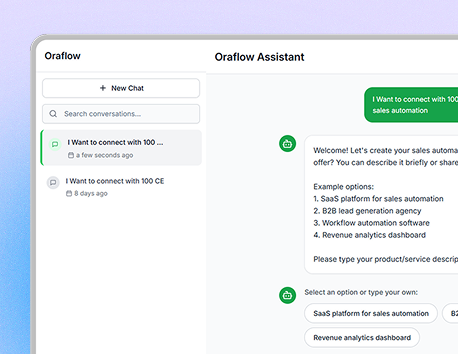
Try Oppora AI
Create Self-Running Agentic Sales Workflows like N8N just by chatting with AI
Get Started for FREE
You already know LinkedIn is where your ideal clients spend their time.
The problem? Turning that presence into a steady stream of consulting clients feels harder than it should.
You post, you connect, you send messages, but the results stay unpredictable. Most consultants treat LinkedIn like a numbers game when it's actually a positioning and consistency game.
In this guide, you'll learn:
Before you dive into tactics, it helps to understand why LinkedIn deserves your attention in the first place.
Not every platform puts you in the same room as the people who can actually hire you.
LinkedIn does, and that changes everything about how you win clients.
On most platforms, you're shouting into a crowd and hoping the right person hears you.
LinkedIn flips that completely. You can find founders, VPs, and department heads by name, role, and company, then reach them directly.
There's no gatekeeper screening your message and no cold-calling barrier slowing you down.
The person who signs off on consulting budgets is one thoughtful message away.
Suggested Reading:
How to Find CEO Email Address in 2026 (28 Real Tactics)That direct access means very little if your first move is a hard pitch.
Consultants sell expertise, and expertise has to be demonstrated before it's trusted. LinkedIn rewards this beautifully.
When you share insights, answer real questions, and show how you think, prospects start seeing you as the obvious choice. They reach out to you instead of the other way around.
That shift, from chasing clients to attracting them, is what makes consulting feel sustainable rather than exhausting.
Authority compounds, but only when you stay visible.
Show up once a month and you're forgotten. Show up consistently and you stay top of mind the moment someone needs help.
This steady presence turns LinkedIn into a reliable pipeline rather than a lucky-break channel.
Opportunities stop feeling random and start arriving on a rhythm you can actually plan around.
Suggested Reading:
How to Do Cold Outreach on LinkedIn (+Proven Strategies)So if LinkedIn is this powerful, why do so many consultants plateau?
The truth is that what works at a small scale often breaks the moment you try to grow it. The platform isn't the problem, the manual approach behind it is.
Finding the right prospects sounds simple until you actually do it every day.
You search for titles, scroll through profiles, check whether someone fits your ideal client, then save them somewhere. Each lead takes minutes, and minutes add up fast.
Before long, you're spending hours hunting for prospects instead of doing the consulting work that pays your bills. That time tax quietly caps how much you can grow.
Suggested Reading:
How to Do LinkedIn Prospecting [10 Smart Hacks for Consistent Leads]Personalization is what makes LinkedIn outreach work, and it's also what makes it hard to scale.
Writing a genuinely tailored message means reading someone's posts, understanding their role, and finding a real reason to connect. That's manageable for ten people a week.
Stretch it to a hundred and one of two things happens. You either burn out trying to keep quality high, or you start copying and pasting generic messages that prospects ignore instantly.
Even when you do reach people, the process rarely holds together.
A reply comes in, you mean to follow up, then a client deadline pulls you away. By the time you remember, the conversation has gone cold.
Most consultants don't lose deals because of bad messaging. They lose them because there's no consistent system tracking who needs a nudge and when.
Suggested Reading:
LinkedIn Sales Lead Generation: 10 Proven Strategies for B2B GrowthHere's the irony of all this manual effort.
The thing that actually wins consulting clients, building real relationships, is the first thing to get squeezed out. When you're buried in admin, the meaningful conversations slip down your priority list.
You end up busy but not effective, active but not visible in the ways that matter. That gap between effort and results is exactly where most LinkedIn strategies stall.
Knowing where most consultants stall makes the fix clearer.
Before you automate anything or scale your outreach, the foundation has to be solid. Pour effort into a weak setup and you simply scale the things that aren't working.
Get these fundamentals right, and every tactic that follows performs better.
Your profile is the first thing a prospect checks after you reach out.
The mistake most consultants make is writing it like a resume. Job titles, past employers, a list of responsibilities, none of which tells a buyer why they should hire you.
A strong consulting profile speaks to outcomes instead.
It makes the visitor think, "This person solves the exact problem I have." That single shift turns your profile from a record of your past into a pitch for your value.
Once your profile earns attention, your offer has to land in seconds.
If a prospect can't tell what you do and who you help within a quick glance, you've lost them. Confused buyers don't ask questions, they just move on.
Spell out the specific result you deliver and for whom. Clarity here does more for your pipeline than any clever tactic ever will.
A clear offer depends on knowing exactly who you're talking to.
Trying to appeal to everyone makes your message bland and your outreach unfocused. When you narrow your niche, the opposite happens.
Your content sharpens, your messages feel relevant, and the right people start recognizing themselves in what you say.
A defined ideal client profile is what makes targeted prospecting possible later.
Even a perfect offer needs proof behind it.
Prospects quietly look for evidence that you can do what you claim. These signals do that work for you before you ever speak:
Each one lowers the buyer's risk and makes saying yes feel safer.
Credibility grows fastest when your content speaks to real struggles.
Posting random tips rarely moves anyone. But when you address the exact problems your ideal clients lose sleep over, you become impossible to ignore.
Build your content around their challenges, and prospects start coming to conversations already convinced you understand them.
With your fundamentals in place, you're ready for the part most consultants jump to far too early.
These are the tactics that actually fill your pipeline.
Some focus on visibility, others on outreach, and a few on turning quiet connections into real conversations. You don't need all of them at once.
Pick the ones that fit your style and build from there.
Let's start with the tactic that solves the time problem we talked about earlier.
Manual prospecting is what holds most consultants back, and this is exactly where automation earns its place.
Oppora is an AI outbound sales agent that handles the repetitive parts of cold email outreach and LinkedIn client acquisition so you can stay focused on actual consulting.
Instead of you doing every step by hand, its AI sales agents run the full flow for you:
You build the workflow once, and it keeps running in the background. That means a steady pipeline of consulting opportunities without the daily grind that usually comes with it.
Automation fills your pipeline, but you still need a reason for prospects to raise their hand.
A well-built lead magnet does that quietly. Notion makes this easy because you can create something genuinely useful in an afternoon.
Think templates, checklists, or mini-frameworks that solve a small piece of your client's problem.
When someone downloads it, they're telling you they have the exact pain you fix.
That single action turns a passive scroller into a warm prospect worth a real conversation.
Lead magnets work even harder when your content has already built trust.
Most consulting feeds are full of opinions and very little help. You can stand out simply by teaching.
Break down a problem your ideal client faces, then show them how to think about solving it. You don't need to give away everything, just enough to prove you understand their world.
When you consistently solve small problems in public, prospects assume you can solve the big ones too.
Teaching shows what you know, but stories show what you've done.
Prospects rarely connect with abstract expertise. They connect with someone who looks like them getting a result they want.
Walk through a client's starting point, what changed, and where they ended up. Keep it honest and specific rather than polished and vague.
These transformation stories make your value feel real, and they often do more selling than any pitch ever could.
Stories pull people toward you, but you can also go to them, the right way.
Most consultants send a connection request cold and wonder why it's ignored. The smarter move is to show up first.
Spend a few days noticing what a decision-maker posts, then react thoughtfully. Leave a comment that adds something, not just a thumbs-up.
By the time your request lands, you're no longer a stranger. You're the person who said something worth remembering, and that recognition changes how your invite is received.
Once you're on someone's radar, timing makes your outreach land harder.
Random connection requests feel like noise. Requests tied to a real moment feel like attention.
A trigger gives you that moment, a reason to reach out that actually makes sense:
Reference the trigger naturally in your note, and your request stops looking like a template. It looks like you were paying attention, which is exactly what earns the accept.
Suggested Reading:
10 Best LinkedIn Connection Automation Tool [Free + Paid Options]Connection requests reach one person at a time, but comments can reach hundreds.
This is one of the most underrated growth tactics available to consultants. When you leave a sharp comment on a popular post, everyone reading it sees you too.
The trick is to add real value rather than chasing attention. Share a quick insight, offer a different angle, or build on the original idea.
Do this consistently in your niche, and your target audience starts seeing your name everywhere. That repeated visibility makes future outreach feel familiar instead of cold.
All this visibility creates a quiet signal most consultants completely ignore.
People who view your profile are already curious. They've taken a small step toward you, and that's an opening worth acting on.
When someone checks you out, reach out with something light and genuine. Skip the pitch and simply acknowledge the visit or reference something relevant to them.
That low-pressure message often sparks the exact conversation you've been hoping for.
You're not interrupting a stranger, you're responding to interest that's already there, and warm interest converts far better than cold outreach ever will.
Warm interest opens the door, but what you say next decides whether it stays open.
The fastest way to kill a promising conversation is to lead with your services. Nobody wants to be sold to in their second message.
Lead with their challenge instead. Ask about the problem they're wrestling with or comment on something specific to their situation.
When you talk about their world rather than your offer, the conversation feels like a peer chatting, not a vendor pitching. The services come up later, naturally, once trust is already there.
Good conversations matter most when you're having them with people ready to buy.
Some prospects are just browsing. Others are actively feeling the pain you solve right now. Buying signals help you tell them apart:
Each of these tells you a company is in motion, and companies in motion need outside help. Reaching out at these moments means you arrive exactly when the need is sharpest, which makes your timing feel almost effortless.
Signals tell you who's growing, but you can also get prospects to reveal themselves.
A well-placed poll does this beautifully. Ask your audience about a challenge they face, and the answers hand you a list of warm prospects.
Someone who votes "struggling with X" has just told you they have the exact problem you fix. That's an open invitation to start a relevant conversation.
Questions work the same way in your posts. The people who engage are quietly raising their hands, and you simply follow up with the ones who fit.
LinkedIn is powerful, but it shouldn't be your only path to a prospect.
Relying on one channel means you're at the mercy of whether someone checks their messages. Pairing LinkedIn with email gives you a second, reliable way in.
This is where a tool like Oppora makes the difference.
You can blend LinkedIn invites and follow-ups with personalized email in one seamless flow, so every prospect gets touched on both channels.
Two relevant touchpoints beat one ignored message, and that combination keeps your pipeline moving even when LinkedIn goes quiet.
Suggested Reading:
How to Combine LinkedIn Outreach with Email CampaignsOutreach brings you clients, but partnerships bring you clients on repeat.
Some of your best opportunities won't come from prospects at all. They'll come from people who serve the same clients you do without competing with you.
Think of a designer if you're a brand consultant, or an accountant if you advise on operations.
These professionals already have the trust you're working to build.
Connect with them on LinkedIn, start a real relationship, and look for ways to send work each other's way. One solid referral partner can quietly feed your pipeline for years.
Even the warmest conversations rarely convert on the first try.
This is where most consultants leave money on the table. They have a good chat, get a "let's talk later," then never circle back.
Timing is everything in consulting, and your prospect's "not now" often becomes "yes" weeks later. The only way to catch that moment is to stay present.
Follow up with value rather than pressure, a useful resource, a relevant thought, a quick check-in.
Do it consistently, and you'll be the one they remember when the need finally becomes urgent.
You've seen the tactics, so let's look at how one system ties them together.
Oppora is an AI sales platform that replaces manual outbound with self-running workflows.
It automates your lead generation, enrichment, outreach, and follow-ups end-to-end, so your pipeline keeps moving without daily effort.
Most of the tactics above share a common bottleneck: the manual work behind them. Oppora removes that friction so you can run everything we've covered without drowning in admin.
Here's how it supports your LinkedIn client acquisition at each stage.
Everything starts with reaching the right people.
Oppora lets you search a lead database of 1B+ prospects and filter down to the exact decision-makers who fit your niche.
Once you've found them, enrichment fills in the missing details automatically.
You get verified emails, role data, and company context layered onto each lead. That means your prospect list isn't just big, it's accurate and ready for outreach the moment you build it.
Sometimes the best prospects show up while you're simply scrolling.
Oppora's Chrome extension captures those leads right from LinkedIn as you browse. You don't have to stop, copy details, or switch tabs.
See someone who fits your ideal client, capture them in a click, and they drop straight into your workflow. It turns everyday browsing into quiet, ongoing prospecting.
If you already use Sales Navigator, your research doesn't have to stay stuck there.
Oppora lets you move those leads into your campaigns and enrich them with verified emails.
The prospects you've carefully filtered become contacts you can actually reach.
That bridge matters because Sales Navigator helps you find people, but it doesn't help you contact them at scale. Oppora closes that gap
As your outreach grows, managing it from one place becomes essential.
Oppora lets you connect multiple LinkedIn accounts and run them from a single, centralized workflow. You're no longer logging in and out or juggling separate tabs.
Everything sits in one view, so you can scale your presence across accounts without losing track of what's happening. That central control keeps growth manageable instead of chaotic.
Scaling LinkedIn outreach always carries one worry, keeping your account safe.
This is where the way Oppora automates matters. Its browser-based activity mimics natural human behavior rather than firing off robotic actions.
That means your connection requests and messages go out at a realistic pace and pattern. You get the efficiency of automation while protecting the account your entire pipeline depends on.
Safer outreach is only half the picture, the other half is connecting your channels.
Oppora lets you build workflows that blend LinkedIn, email, and CRM into one seamless flow:
Instead of stitching tools together by hand, the whole sequence runs itself. Each touchpoint reinforces the last, and nothing slips through the cracks.
Beyond the built-in features, Oppora can stretch even further.
Through Claude MCP, you can connect Oppora to Claude and run prospecting, enrichment, and outreach actions directly from your conversation.
That means you can manage your LinkedIn client acquisition using plain language, turning a simple chat into real outbound work.
Knowing what to do is only half the battle, avoiding the wrong moves matters just as much.
Most consultants don't fail on LinkedIn because they lack effort. They fail because a few common mistakes quietly undo everything they're building.
Spot these early, and you'll save yourself months of spinning your wheels.
This is the mistake almost every consultant makes without realizing it.
You describe what you do, the methods, the process, the deliverables. But prospects don't buy your process, they buy the result it creates.
Telling someone you offer "strategy consulting" means little. Showing them how you helped a client double their pipeline means everything.
Lead with the outcome, and your value clicks instantly. Lead with the service, and you sound like everyone else.
Nothing cools a new connection faster than an instant sales pitch.
Someone accepts your request, and seconds later a wall of text about your services lands in their inbox. It feels transactional, and it tells them you only connected to sell.
The relationship hasn't earned a pitch yet. Open with curiosity about their work or a genuine reason you reached out instead.
Earn the right to talk business, and the pitch becomes a natural next step rather than an unwelcome ambush.
Plenty of consultants post for two weeks, see nothing happen, then quietly disappear.
LinkedIn rewards consistency, not bursts of effort. Your audience needs to see you regularly before your name starts to stick.
Showing up once in a while keeps you invisible at the exact moment a prospect needs help. A steady rhythm, even a simple one, keeps you top of mind when the need finally appears.
Trying to appeal to everyone is one of the surest ways to reach no one.
When your message is broad, it's forgettable. When it's specific, the right people feel like you're speaking directly to them.
A defined niche sharpens everything, your content, your outreach, and the referrals that come your way. Narrowing down feels risky, but it's what makes your pipeline predictable.
The final mistake is treating LinkedIn like a one-and-done transaction.
You connect, you chat, then you move on, and the relationship goes cold. But consulting runs on trust, and trust takes time to build.
Stay in touch with light, valuable interactions even when there's no deal on the table. Those nurtured relationships are the ones that turn into clients when the timing is finally right.
Winning clients on LinkedIn isn't about doing more, it's about doing the right things consistently.
Position yourself as an expert, focus on outcomes over services, and show up often enough that the right people remember you. Pair that with smart, well-timed outreach, and your pipeline stops feeling like luck.
The catch? All of this takes time most consultants don't have.
That's where letting a system handle the heavy lifting changes everything. If you'd like to run your prospecting, outreach, and follow-ups without the daily grind, Oppora is built to do exactly that, so you can focus on consulting.
Most consultants see early conversations within a few weeks, but consistent client flow usually takes two to three months. The timeline depends on how active you are, how clear your niche is, and how reliably you follow up.
Stay modest to protect your account, usually 15 to 25 thoughtful requests daily. Quality matters far more than volume here. Personalized requests tied to a real trigger convert better than dozens of generic ones that get ignored or flagged.
Not to start. A well-optimized free profile plus consistent engagement can win clients. Sales Navigator helps once you scale, since it sharpens targeting and filtering, but it's an accelerator rather than a requirement for early consulting traction.
Start simple. Share a client problem you solved, a quick lesson, or your take on a common mistake. You don't need polished prose, just useful insight. Consistency and clarity matter far more than perfect writing on LinkedIn.
Don't take silence as rejection. Follow up with value rather than pressure, a relevant resource or a light check-in. Timing often drives the silence, and a patient, helpful nudge weeks later frequently revives the conversation when their need returns.
Summarize with AI
Share