Home
Blog
Oppora’s Claude MCP is Live. Connect our Email Database & Outreach features with any tool to build smart automations inside Claude.
Home
Blog
Stephen Parker
Published July 9, 2026
10 min

Try Oppora AI
Create Self-Running Agentic Sales Workflows like N8N just by chatting with AI
Get Started for FREE
You want more local leads, but checking every Google Business Profile to see whether a business has a website is painfully slow.
After that, you still need to find contact details, organize everything, and repeat the same process hundreds of times. Simply put, it doesn't scale.
Instead, Oppora AI can find thousands of businesses without websites in minutes, enrich them with verified contact details, and prepare them for outreach.
In this guide, you'll learn how to:
Once you know these businesses are valuable prospects, the next question is simple.
How do you find them without spending your whole day searching manually?
That is where Oppora AI helps you move faster.
At core Oppora is an AI outbound sales agent that can scrape Google Maps data and help you discover local businesses that match your target criteria, including businesses that do not have a website yet.
Instead of checking business profiles one by one, you can tell Oppora:
This turns manual research into a faster, cleaner prospecting workflow, helping you find more qualified leads with less time spent searching.
Come to Oppora's Local Business Finder, enter your target business category, choose the city or location you want to search, set your preferred search radius, and click Search.
Oppora instantly finds matching local businesses and returns valuable business data, including business names, addresses, phone numbers, websites, ratings, reviews, and other available details.
You can search for businesses like:
This gives you a focused list of businesses within your target location and industry instead of a random collection of companies.
That matters because a web design agency, SEO consultant, or marketing freelancer does not need every business in the area.
You need businesses that are most likely to benefit from getting online, improving their visibility, and attracting more customers.
The biggest time-waster in manual research is checking whether each business has a website.
You usually have to open every profile and check things like:
Oppora AI helps you identify businesses that do not have a proper website, so you can quickly spot strong opportunities from your Google Maps lead search
These businesses often already have:
But they are missing a digital home where people can learn about them, trust them, and contact them easily.
That gap gives you a natural reason to reach out.
Not every business without a website is a good prospect.
Some may be too small. Some may be inactive. Others may not match the type of client you want to work with.
That is why filtering matters.
With Oppora, you can narrow your list using advanced filtering based on criteria like:
This helps you avoid bloated lists filled with weak prospects.
The goal is not to find the most businesses.
The goal is to find the right businesses that are more likely to need your offer and respond to your message.
After filtering your results, you can save those businesses into organized lead lists.
This keeps your research clean from the start.
Instead of copying names into a spreadsheet and losing track of everything, you can group prospects by:
So you might create one list for restaurants without websites in Atlanta.
Then you might create another list for salons without websites in Austin.
Each list can have its own message angle, offer, and follow-up sequence
This makes your outreach feel more relevant because every campaign is built around a specific audience.
Suggested Reading:
How to Build a Prospect List Without Manual Research — Try Oppora.ai in LiveFinding a business without a website is only the first step.
To reach them, you still need the right contact details.
Oppora can help enrich your lead list with:
This is important because many local businesses do not publish complete contact information everywhere.
You may find a business name on Google Maps, but still need to know who to contact.
That person could be the:
With enriched data, your list becomes much more useful.
You are no longer staring at business names.
You have real prospects, real contact details, and a clear path to start the conversation.
Once your lead list is ready, the next step is outreach
But this is where many people make a mistake.
They send the same generic message to every local business and expect replies.
That rarely works.
A business without a website may already know they need one, but they still need to trust why you are reaching out and how you can help.
So your outreach should feel specific, relevant, and easy to respond to.
Before you contact a local business, look at what you already know about them.
You can use details like:
These small details make your message feel personal.
Instead of saying:
“We build websites for small businesses.”
You can say:
“I noticed your salon has strong local reviews in Austin, but I could not find a website where new customers can view services, prices, or book an appointment.”
That message feels more relevant because it points to a real gap.
With Oppora, you can use AI personalization to create outreach based on each business, not just a copied template.
This helps you write emails that sound more natural and less like mass outreach.
Suggested Reading:
How to Send Personalized Emails at Scale Without Spam FlagsNot every local business owner checks the same channel.
Some respond faster to email.
Some are active on LinkedIn.
Some prefer a direct phone call.
That is why your outreach should not depend on one channel only.
You can reach prospects through:
For businesses without websites, your message should be simple.
You are not trying to overwhelm them with a long pitch.
You are trying to start a clear conversation around one problem:
They are missing a website that could help local customers find, trust, and contact them.
A simple outreach angle could be:
“I found your business while searching for local service providers in Dallas. You already have local visibility, but I noticed you do not have a website connected. Are you currently looking to get one built?”
That feels direct, useful, and easy to answer.
You can also use phone numbers from enriched lead data to call high-priority prospects directly.
This works well when the business is local, service-based, and likely to make decisions quickly.
Suggested Reading:
How to Combine LinkedIn Outreach with Email CampaignsOnce replies start coming in, organization becomes important.
If you are reaching out through multiple inboxes or campaigns, it is easy to miss warm leads.
You may have one reply in Gmail, another in Outlook, and another inside a campaign tool.
That creates confusion.
Oppora helps bring replies into one shared inbox, so you can manage conversations more clearly.
From one place, you can track:
This matters because finding businesses without websites is only useful if you can manage the follow-up properly.
A local business owner may not say yes in the first reply.
They may ask about pricing, timeline, examples, or whether you can help with hosting and maintenance.
When every conversation is organized, you can respond faster and keep the deal moving.
That is how your prospect list turns into real sales conversations.
Finding one lead list is useful, but local markets change every day.
New restaurants open, contractors get listed, and salons create Google Business Profiles without having a proper website.
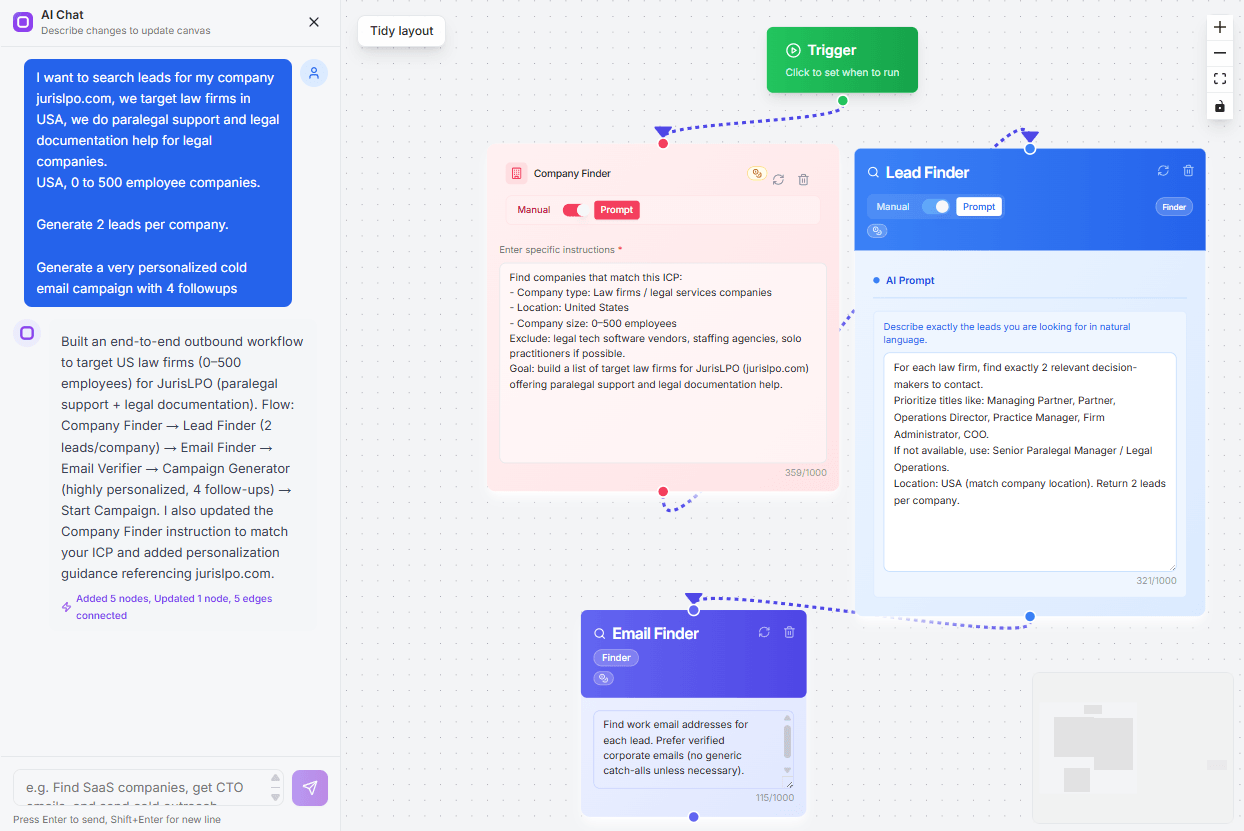
With Oppora.ai, you can turn this into a self-running workflow instead of repeating manual research every week.
Here is a simple workflow example:
So instead of starting from zero every time, Oppora keeps finding fresh local prospects on loop.
You build the workflow once, and the system continues finding, enriching, and preparing businesses for outreach automatically.
That means your pipeline keeps growing while you focus on calls, proposals, and closing the businesses that already showed interest in your target market.
Oppora can speed up this process, but you can still find local businesses without websites manually.
This is useful when you are testing a new city, niche, or offer before building a larger campaign.
Start with Google Maps and search by category plus location.
You can try:
Open each profile and check whether it has a website button.
If the business has reviews, photos, hours, and a phone number but no website, it can be a strong prospect.
Many local businesses use Facebook as their only online presence.
Search Facebook by city and business type, then check the About section.
Look for:
If they are active on Facebook but do not have a website, your outreach can focus on helping them look more professional and easier to find.
You can also search directories like Yelp, Yellow Pages, chamber of commerce websites, and local city directories.
These sites often list business names, categories, addresses, and phone numbers.
Check whether each listing includes a real website.
If not, add that business to your lead list and keep it organized for later outreach.
Search operators help you find more specific prospects.
Try searches like:
These searches can reveal businesses using social pages or directories instead of websites.
Manual research works for small lists.
But finding hundreds of businesses takes time.
You have to search, check profiles, copy details, verify contacts, remove duplicates, and organize everything manually.
That is why manual methods are best for testing, not scaling. Once you need consistent volume, it makes more sense to scale contact discovery with a cleaner system.
Finding local businesses without websites is one of the simplest ways to uncover prospects that already have a visible need.
They may have reviews, customers, phone numbers, and active listings, but no real website to turn local attention into trust, bookings, or sales.
You can find them manually through Google Maps, Facebook, directories, and search operators.
That works when you are testing a small list.
But once you want to find hundreds or thousands of local businesses, manual research quickly becomes slow and messy.
Oppora AI helps you turn the same process into a repeatable workflow.
You can search, detect missing websites, filter prospects, enrich contacts, and start outreach from one place.
So instead of spending hours copying business names into spreadsheets, you can focus on starting better conversations.
Explore Oppora.ai when you are ready to find and reach local prospects faster.
You can use Oppora AI to search by city, industry, or business category, then identify companies with no proper website and save them into outreach-ready lead lists.
Small businesses without a website often already have local demand, reviews, and customers, but they are missing an online presence that can build trust and bring in more leads.
Oppora AI helps you find, filter, enrich, and organize website-less local business prospects into clean lists that are ready for outreach.
You can find local businesses across different cities, industries, and categories, such as restaurants, dentists, salons, contractors, agencies, clinics, auto shops, and other service-based businesses.
The best way is to use a repeatable workflow that finds local companies, checks website availability, enriches contact data, and prepares prospects for outreach automatically.
Summarize with AI
Share