Home
Blog
Oppora’s Claude MCP is Live. Connect our Email Database & Outreach features with any tool to build smart automations inside Claude.
Home
Blog
Stephen Parker
Published July 20, 2026
9 min

Try Oppora AI
Create Self-Running Agentic Sales Workflows like N8N just by chatting with AI
Get Started for FREE
Choosing between Lusha and Seamless.AI can feel confusing. Both promise faster prospecting, reliable contact data, and easier access to decision-makers.
But the real differences show up in accuracy, pricing, phone data, integrations, and how each platform fits into your daily workflow.
A tool may seem affordable at first. Costs can rise quickly when you add credits, outreach software, enrichment tools, and CRM integrations.
In this guide, you will compare:
Lusha and Seamless.AI both help you find B2B contact information.
However, they differ in how they support prospecting, enrichment, and outreach.
Lusha is a B2B sales intelligence platform.
It helps you find professional email addresses, phone numbers, company details, and buyer information.
You can search inside the platform or use its Chrome extension on LinkedIn and company websites.
Lusha is better suited to teams that already use a CRM or outreach tool and mainly need contact data.
Seamless.AI is an AI-powered sales prospecting platform.
It helps you search for decision-makers, uncover contact details, and build targeted lead lists.
You can use advanced filters, bulk searches, buyer intent data, and its Chrome extension.
Seamless.AI also offers broader sales engagement features than Lusha.
Suggested Reading:
Lusha vs Apollo: Pros, Cons & Hidden Costs You Should KnowLusha offers a simpler data-focused experience.
Seamless.AI gives you more tools for finding and engaging prospects.
Both platforms help you find B2B contacts, but they work differently.
Lusha focuses on verified data, enrichment, and buying signals. Seamless.AI searches and validates contact information in real time.
These database figures are company-reported and may use different counting methods.
Lusha promotes more than 300 million contacts, while Seamless.AI claims over 1.3 billion.
Seamless offers broader stated coverage, but database size alone does not guarantee usable data.
Lusha reports 98% email accuracy.
Seamless.AI uses a real-time verification process when you search for emails and phone numbers.
Both platforms let you filter prospects by role, company, location, industry, and seniority.
Lusha adds buying signals, while Seamless.AI supports AI-assisted prospecting.
Both platforms connect with popular CRMs and offer browser extensions.
Lusha feels more focused. Seamless.AI provides a broader prospecting workflow.
Features matter, but prospecting performance depends on whether the data helps you reach the right person.
Both platforms support email and phone discovery, yet their verification methods and workflows differ.
Lusha validates email addresses and displays confidence scores before you reveal a contact. It also refreshes records as new information becomes available.
Seamless.AI researches and verifies contact data during the search process.
This can help you discover contacts quickly, although you should still verify important lists before launching large campaigns.
Both tools provide direct dials and mobile numbers.
Lusha works well when you need a few contacts while browsing LinkedIn. Seamless.AI is designed for broader searches and bulk prospecting.
Phone coverage can vary by region, industry, and seniority. Test both platforms using a sample of your ideal prospects before choosing a plan.
Lusha continuously updates job changes, phone numbers, and company details.
It can also enrich CRM records and uploaded lists.
Seamless.AI offers enrichment tools for updating missing or outdated contact and company information.
Lusha gives you a simpler workflow for quick contact lookups.
Seamless.AI offers more search depth and prospecting tools, but you may need more time to learn the workflow.
Your choice depends on whether you value faster individual lookups or higher-volume prospect research.
Data quality matters, but the platform must also fit naturally into your daily sales process.
Lusha keeps prospecting simple, while Seamless.AI gives you more tools and workflow options.
Lusha lets you find contacts through its dashboard, LinkedIn, company websites, Sales Navigator, and supported CRM pages.
Its extension helps you reveal contact details without leaving the page you are viewing.
Seamless.AI supports real-time contact searches, advanced filters, bulk actions, and prospecting across LinkedIn and company websites.
Both platforms let you save prospects, organize lead lists, export data, and move contacts into connected sales tools.
Lusha feels more straightforward when you only need to build and enrich targeted lists.
Seamless.AI provides more options for teams handling larger prospecting volumes.
Lusha has a cleaner learning curve because its main workflow focuses on finding and enriching contacts.
Seamless.AI includes more advanced search, buyer intent, bulk prospecting, and sales engagement features. This creates greater flexibility but can require more setup.
Lusha fits teams that find prospects and then move them into a separate CRM or outreach platform.
Seamless.AI supports a broader workflow, covering contact discovery, CRM syncing, email campaigns, calls, and follow-up tasks.
Your choice depends on whether you prefer simplicity or a more feature-rich prospecting process.
Pricing can change the value you get from each platform.
Lusha publishes standard plan prices, while Seamless.AI keeps most paid pricing behind a sales consultation.
Lusha charges one credit for an email reveal and ten credits for a phone number. Monthly unused credits can roll over up to twice your plan limit.
Suggested Reading:
Kaspr vs Lusha: Features, Pricing & Accuracy ComparedLusha offers Free, Starter, Pro, Premium, and Scale plans.
Its transparent pricing makes initial budgeting easier. However, your actual value depends on how quickly email and phone reveals consume credits.
Seamless.AI provides 50 credits on its free plan.
Its Pro plan uses annual credit packages, starting at 10,000 annual credits. Pro and Enterprise pricing require you to contact sales.
Lusha offers better pricing visibility and may suit smaller teams with predictable usage.
Seamless.AI may provide stronger value for high-volume prospecting, but you must request a quote and evaluate add-on costs before deciding.
Pricing and promotional discounts may change, so confirm the final contract terms directly with each provider.
Lusha and Seamless.AI can improve prospecting, but they do not always replace the rest of your sales stack.
The main limitations appear after you find the contact data.
Lusha mainly focuses on contact discovery and enrichment.
You may still need separate tools for:
Seamless.AI offers more engagement features, but advanced outreach may still require additional software.
A complete outbound workflow often depends on several platforms.
Your sales stack may include:
Managing these tools can create extra subscriptions, integrations, and data gaps.
Finding a lead does not complete the outreach process.
You may still need to:
These steps can become time-consuming as your outreach volume grows.
The starting price may appear affordable.
However, your total cost can increase through:
The larger limitation is not only pricing. It is the effort required to connect prospecting, outreach, replies, and CRM updates across multiple tools.
Lusha and Seamless.AI help you find contacts, but you may still need separate tools for outreach, replies, and CRM updates.
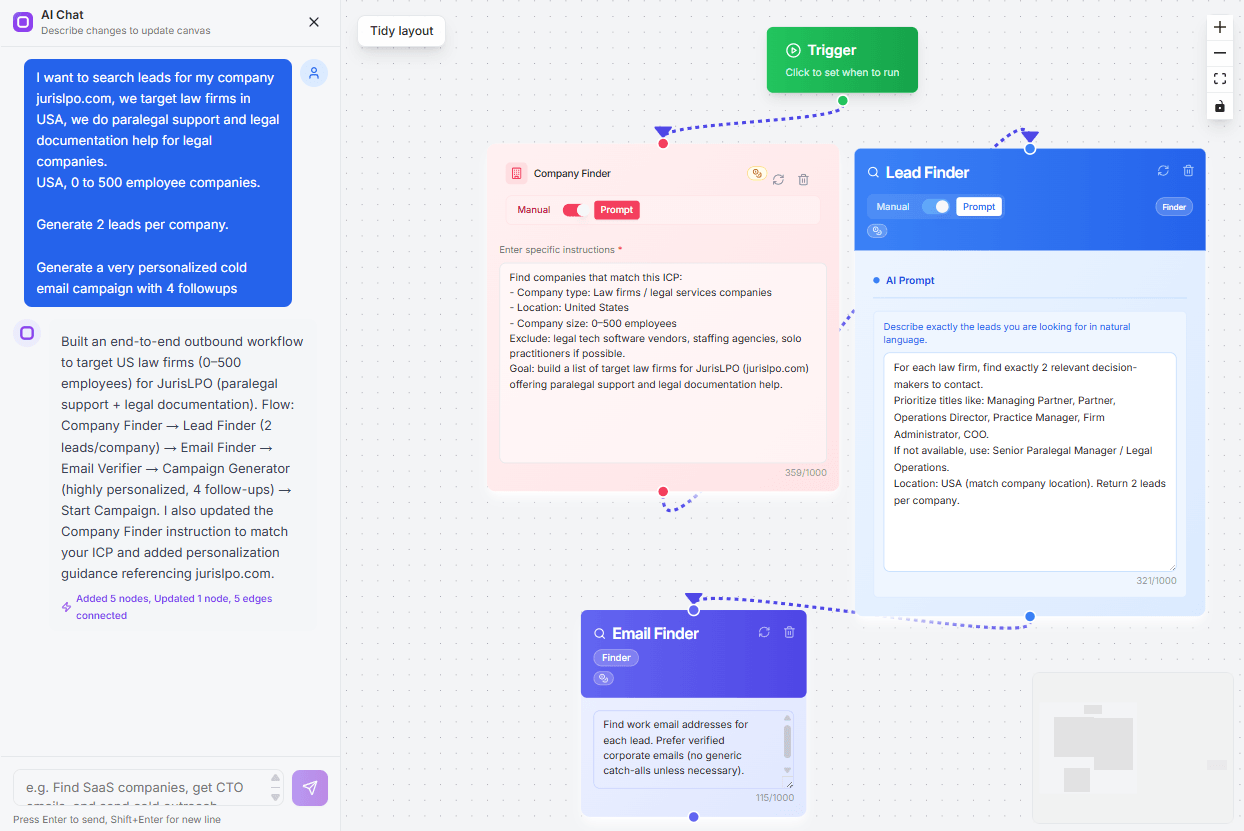
Oppora connects these steps through AI-powered sales workflows that continue running after setup.
Oppora’s current materials describe access to 120M+ verified emails and up to 350M+ contacts through waterfall data sources.
You can also connect your own data provider to expand coverage.
Oppora can enrich, verify, score, clean, and organize prospect data before outreach begins.
This reduces manual list preparation.
You can create unlimited campaigns, connect multiple mailboxes, warm domains, and automate email sequences.
Sending is limited by unique monthly recipients rather than total emails.
Oppora’s AI can:
Oppora combines lead discovery, enrichment, outreach, reply management, and CRM syncing.
This gives you one connected workflow instead of several disconnected sales tools.
Suggested Reading:
11 Lusha Alternatives for 2026: Better Data, Pricing & AccuracyLusha and Seamless.AI both help you find B2B contacts, but the right choice depends on how you work.
Lusha is a better fit when you want a simple contact database with an easy browser extension and clear pricing.
Seamless.AI suits teams that need broader prospecting features, real-time search, and more advanced sales intelligence.
However, both platforms may leave you managing separate tools for email outreach, follow-ups, replies, mailbox warm-up, and CRM updates.
That can increase costs and create more manual work as your sales process grows.
Oppora offers a more connected alternative by combining prospecting, enrichment, verification, cold email automation, AI replies, and CRM syncing in one workflow.
You can build the process once and let the AI agents handle the repetitive steps.
If you want to simplify your sales stack without losing control, exploring Oppora.ai may help you see whether an all-in-one workflow fits your team better.
Lusha is better for simple contact discovery, transparent pricing, and an easy browser extension, while Seamless.AI is more suitable for larger-scale prospecting, advanced filters, and broader sales intelligence features.
Neither platform is more accurate in every situation because results can vary by region, industry, company size, and job seniority, so testing both with a sample of your target prospects is the best approach.
Both Lusha and Seamless.AI provide direct dials and mobile numbers, but Seamless.AI claims broader data coverage, while Lusha is often easier for quick contact lookups.
Not always, because Lusha publishes its standard plan prices, while Seamless.AI uses custom pricing for most paid plans, making the final cost dependent on credits, users, and contract terms.
Oppora is a strong alternative if you want prospecting, enrichment, email verification, cold outreach, AI follow-ups, reply management, mailbox warm-up, and CRM syncing in one platform.
Summarize with AI
Share