Home
Blog
Oppora’s Claude MCP is Live. Connect our Email Database & Outreach features with any tool to build smart automations inside Claude.
Home
Blog
Stephen Parker
Published June 26, 2026
18 min

Try Oppora AI
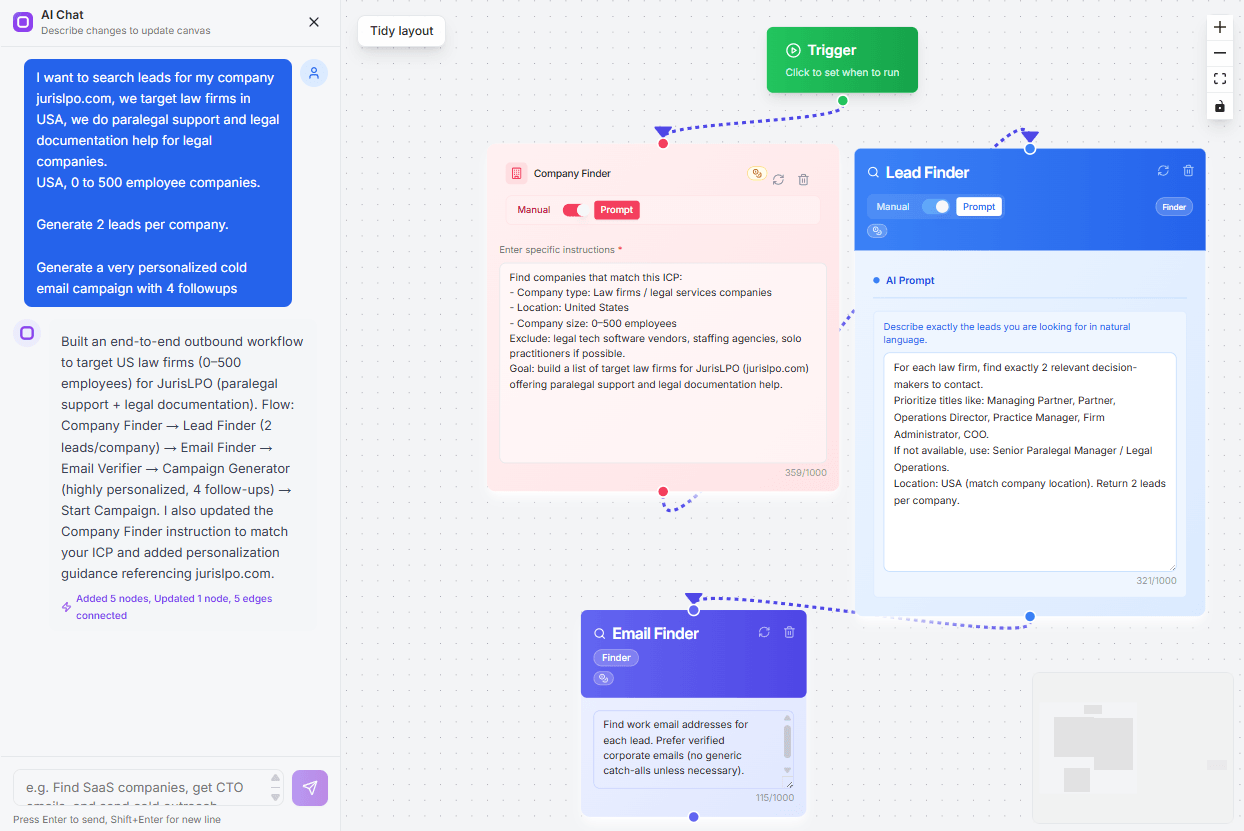
Create Self-Running Agentic Sales Workflows like N8N just by chatting with AI
Get Started for FREE
Choosing between Lusha vs Apollo looks simple until you start mapping the real workflow.
You are not just buying contact data. You are choosing how your team finds leads, verifies them, reaches out, follows up, and manages replies without wasting hours on manual work.
Apollo feels broader because it combines prospecting and outreach. Lusha feels sharper when your main goal is accurate contact discovery.
But the real question is: which one fits your sales process better in 2026?
In this guide, you’ll see:
Before you compare every feature, it helps to zoom out first.
Apollo and Lusha both help you find B2B contacts, but they solve different parts of the sales process.
Apollo is closer to a sales engagement platform because it combines prospecting, enrichment, sequences, CRM sync, and outreach workflows.
Lusha is more focused on revealing verified contact and company data while you browse LinkedIn, Sales Navigator, CRM pages, or company websites.
Key takeaways:
Suggested Reading:
Instantly AI vs Apollo.io: Features, Pricing & Results ComparedThe biggest mistake in the Lusha vs Apollo comparison is assuming both tools are trying to do the same thing.
They are not.
Both help you find prospects, but they sit in different parts of the outbound sales workflow.
Apollo is built for teams that want to manage more than contact discovery.
You can use it to find prospects, build lead lists, create email sequences, send follow-ups, track engagement, and sync activity with your CRM.
That makes Apollo useful when your team wants one platform to support the full outbound motion.
It is especially helpful for:
Suggested Reading:
5 Best Apollo.io Alternatives for B2B Lead GenerationLusha is more focused on contact discovery and enrichment.
You use it when you need verified emails, phone numbers, direct dials, and LinkedIn prospect data without building a complex outbound system.
This makes Lusha useful when your workflow is simple.
It is especially helpful for:
Suggested Reading:
11 Lusha Alternatives for 2026: Better Data, Pricing & AccuracyChoose Apollo if you want a broader sales engagement platform that helps you move from prospecting to outreach.
Choose Lusha if you mainly need accurate contact data and already have tools for email campaigns, CRM workflows, and follow-ups.
So the real question is not just “Which tool is better?”
It is “Which tool removes the right kind of work from your sales process?”
Now that the positioning is clear, let’s compare both tools across the parts of your sales workflow that matter most.
Apollo is stronger when you want prospecting and outreach in one place.
Lusha is stronger when your main goal is finding accurate contact details quickly.
Apollo usually works better when you need to build larger prospect lists across different industries, regions, and company sizes.
It is designed for teams that want to search, segment, and build outbound lists from one platform.
Apollo is stronger for:
Lusha also gives you access to B2B contact and company data, but it feels more focused on contact discovery than full list building.
Lusha is stronger for:
So, Apollo is better for broad lead generation.
Lusha is better when you want verified details for specific prospects.
Both Apollo and Lusha help you find business emails, but the workflow feels different.
Apollo is useful when email discovery is part of the full outbound process. You can find leads, save them, add them to a sequence, and start outreach from the same platform.
Apollo works well when you need:
Lusha is more focused on helping you reveal verified contact information before sending it to your CRM or outreach tool.
Lusha works well when you need:
If speed across the full workflow matters, Apollo has the advantage.
If contact accuracy before outreach matters most, Lusha may feel more reliable.
Phone number quality is one of the main reasons teams consider Lusha.
It is often preferred by sales teams, recruiters, and business development reps who care about direct dials and mobile numbers.
Lusha is useful for:
Apollo also provides phone numbers, but phone data is only one part of its broader sales engagement workflow.
Choose Apollo if calling is one channel in your outbound motion.
Choose Lusha if phone discovery is one of your biggest buying reasons.
Both tools support LinkedIn prospecting through Chrome extensions, but the experience is not exactly the same.
Lusha feels simple when you are browsing LinkedIn or Sales Navigator and want to reveal contact details quickly.
Lusha is strong for:
Apollo also supports LinkedIn prospecting, but the advantage comes after you capture the lead.
Apollo is stronger for:
So, Lusha is smoother for quick contact discovery.
Apollo is better when LinkedIn prospecting needs to connect directly to outreach.
Apollo performs better when your team needs advanced search and filtering.
You can narrow prospects by role, seniority, company size, industry, location, and other sales criteria.
Apollo is better for:
Lusha is better when you want to find or enrich specific contacts instead of building a full campaign list from scratch.
Lusha is better for:
This is where Apollo becomes the stronger platform.
Apollo helps you move from prospecting to engagement without leaving the tool.
Apollo supports:
Lusha does not compete as strongly here.
It helps you find and enrich contacts, but you will usually need another platform for email automation, campaign management, and follow-ups.
Apollo has more AI features because it supports more parts of the outbound workflow.
Apollo is useful for:
Lusha’s AI capabilities are more basic because the platform is still mainly focused on contact data and enrichment.
This is where modern outbound is changing.
Teams no longer want to only find contacts. They want to find the right leads, personalize outreach, send campaigns, follow up, manage replies, and book meetings with less manual work.
The real productivity question is not just how fast you can find contacts.
It is how much manual work remains after you find them.
Apollo removes more steps from the outbound workflow because it connects prospecting, outreach, CRM activity, and reporting. Lusha saves time mostly in the contact discovery and enrichment stage.
Apollo gives you a more complete prospecting workflow.
You can search for leads, apply filters, build lists, enrich contacts, and move prospects into outreach campaigns from the same platform.
Apollo helps reduce manual work around:
Lusha keeps prospecting simpler.
You can reveal emails, phone numbers, and company details while browsing LinkedIn or Sales Navigator. This is useful when you already know who you want to contact.
But if you need to build larger lists, organize prospects, and move them into campaigns, more manual work may still remain.
Apollo saves more time once outreach begins.
You can create email sequences, use templates, schedule follow-ups, and manage campaign activity in one place.
Apollo is stronger for:
Lusha does not focus on full outreach automation.
You can use it to find contact details, but you will usually need another platform to send campaigns, manage follow-ups, and track performance.
So if your team already uses a separate outreach tool, Lusha can fit into that stack.
But if you want fewer tools and fewer handoffs, Apollo removes more manual work.
Both platforms can connect with CRMs, but Apollo usually fits better into a complete sales workflow.
Apollo works well for teams that want prospecting, outreach, and CRM activity to stay connected.
This helps with:
Lusha also offers CRM integrations and can push enriched contact data into your system.
That is helpful when your main need is cleaner prospect data.
But after the contact is synced, your team may still need other tools for sequences, follow-ups, reply management, and pipeline movement.
Zapier can help connect gaps in both tools, but relying too much on connectors can make your workflow harder to manage as the team grows.
Apollo has the advantage in AI productivity because it supports more outbound tasks.
Its AI features can help with email writing, sequence creation, recommendations, and faster campaign setup.
Apollo can reduce manual work around:
Lusha’s AI features are more limited because the platform is mainly built around contact data.
It helps you find the right information faster, but it does not remove as much work from campaign creation, personalization, follow-ups, or reply handling.
So the productivity gap is clear.
Apollo saves more manual work across the outbound process.
Lusha saves more manual work when your biggest bottleneck is finding accurate emails and phone numbers.
Pricing pages rarely show the full cost of using a sales tool.
You may start with a simple monthly plan, but the real cost appears when your team begins exporting leads, revealing phone numbers, adding users, syncing CRM data, or scaling outbound campaigns.
This matters in the Lusha vs Apollo comparison because both tools use credits in some way. And once your sales motion grows, those credits can disappear faster than expected.
Apollo is usually more cost-effective if you need prospecting and outreach together. Since email sequences, follow-ups, and campaign management are already part of the platform, you may avoid paying for a separate outreach tool.
But you still need to watch for:
Lusha can become more expensive when your team relies heavily on phone numbers and direct contact reveals.
It works well for accurate contact discovery, but if you also need outreach automation, campaign management, AI personalization, or reply handling, you may need extra tools around it.
That can increase your total monthly cost quickly.
The hidden cost is not only about money.
It is also the time your team spends moving data between tools, cleaning exports, checking contact quality, managing follow-ups, and updating CRM records manually.
So before choosing either platform, ask one simple question:
How many tools will your team still need after buying this one?
If Apollo covers most of your prospecting and outreach workflow, the cost may be easier to justify.
If Lusha gives you better contact data but requires separate software for everything after discovery, the total cost may be higher than it first appears.
A large database sounds impressive, but it does not always mean better leads.
What matters more is whether the contact is accurate, reachable, relevant, and fresh enough for your sales team to use.
Apollo is strong when you need broad lead coverage. It gives you access to a wide range of companies, roles, industries, and regions, which helps when your team is building large outbound lists.
That makes Apollo especially useful for startups, SMBs, and sales teams that need volume.
Lusha often feels stronger when your priority is contact accuracy, especially phone numbers and direct dials.
It is a good fit when your team already knows the accounts you want to reach and simply needs reliable contact information for the right decision-makers.
The difference becomes clearer when you think about your sales motion.
If your team is running high-volume outbound, Apollo may deliver better results because you can find more leads, segment them, and move them into outreach faster.
If your team works with fewer, higher-value accounts, Lusha may deliver better results because the contact data can feel more precise.
You should also look at duplicate contacts, outdated job titles, company changes, and missing decision-makers.
These small data issues can quietly lower reply rates because your team ends up contacting the wrong person or using outdated information.
So the better lead source depends on what you value most.
Choose Apollo if you need more coverage and campaign-ready lead lists.
Choose Lusha if you need cleaner contact details for specific people and accounts.
There is no universal winner in the Lusha vs Apollo debate.
The better choice depends on how your team sells, how much automation you need, and whether you want a contact database or a complete outbound workflow.
If you are a solo founder, Apollo usually makes more sense because you can find leads and run basic outreach without building a large sales stack.
You may not have time to connect multiple tools, clean exports, and manage follow-ups manually.
If you are a startup sales team or SDR team, Apollo also fits well because it supports prospecting, email sequences, CRM sync, and reporting.
That gives your reps a more connected workflow.
Lusha fits better when your team already has an outreach system and only needs better contact discovery.
Recruiters, account executives, and relationship-driven sellers may prefer Lusha because they often need accurate emails and phone numbers for specific people, not large automated campaigns.
For enterprise sales teams, Apollo can be useful because reporting, integrations, and workflow visibility matter more as your team grows.
Marketing teams may also prefer Apollo when they need contact data connected with engagement, CRM activity, and campaign operations.
But if you are an outbound agency or a scaling SaaS company, your needs may go beyond both tools.
You may need AI prospecting, contact enrichment, multichannel outreach, automated follow-ups, reply handling, and workflow automation in one place.
That is where Oppora.ai can be a stronger fit.
Instead of only helping you find contacts, Oppora.ai is built for teams that want to connect lead generation, personalization, campaign execution, and follow-up workflows without depending on too many separate tools.
Even after choosing Apollo or Lusha, many teams still need extra tools to complete their outbound workflow.
That is because finding contacts is only one part of sales.
You still need to personalize messages, send campaigns, manage replies, book meetings, track activity, and keep your CRM updated.
Apollo covers more of this workflow than Lusha, especially around email outreach and sequences. But teams may still add separate tools when they need deeper personalization, advanced workflow automation, reply handling, shared inboxes, or multichannel campaign management.
Lusha usually requires more add-ons because it mainly focuses on contact discovery and enrichment.
After finding leads in Lusha, many teams still need tools for:
This creates a common problem.
Your team may start with one tool, then slowly add another for email campaigns, another for AI writing, another for reply management, another for meeting scheduling, and another for CRM cleanup.
At first, that setup feels flexible.
But as your team grows, it becomes harder to manage.
Data starts moving between too many systems. Follow-ups get missed. Replies sit in different inboxes. Managers lose visibility. And your reps spend more time maintaining the workflow than actually starting conversations.
That is why more outbound teams now prefer platforms that combine these capabilities into one connected workflow.
Instead of paying for several subscriptions and stitching them together manually, they want one system that can find leads, enrich data, personalize outreach, send campaigns, manage replies, book meetings, and sync everything back to the CRM.
Apollo gets you closer to that model than Lusha.
But if your goal is a more automated outbound engine, you may need to look beyond both.
By this point, the difference is clear.
Apollo helps you find leads and run outreach. Lusha helps you find accurate contact details. But some teams need more than prospecting or data enrichment alone.
They need a system that connects the full outbound workflow.
That is where Oppora.ai fits as the next step, especially for teams that want prospecting and execution working together.
Apollo is useful when you want lead generation and email outreach in one platform.
Lusha is useful when your priority is contact discovery, especially verified emails, phone numbers, and LinkedIn prospecting.
Oppora.ai is built for teams that want those pieces connected into one AI-powered outbound workflow.
Instead of stopping after contact discovery, Oppora.ai helps you move from lead generation to personalization, campaign creation, multichannel outreach, reply handling, and workflow automation.
This matters when your team does not want to keep switching between tools just to complete one sales motion.
So, Apollo and Lusha are still strong choices.
But if your goal is to combine lead generation, AI-powered personalization, and automated outreach within a single workflow, Oppora.ai gives you more than just contacts.
Most outbound teams do not struggle because they lack contacts.
They struggle because every step after finding a contact still needs manual work. You find leads in one tool, verify them in another, write emails somewhere else, send campaigns from another platform, and then manage replies and CRM updates manually.
Oppora.ai is built to connect that full workflow, not just help you collect another list of prospects. Its pricing page also positions it around one pricing model for lead finding, data enrichment, mailbox warm-up, and outreach automation.
Oppora.ai brings the core outbound steps into one platform.
Instead of stopping at contact discovery, it helps you move from finding leads to launching outreach campaigns.
You can use Oppora.ai for:
This makes the workflow easier for teams that do not want to export leads, clean spreadsheets, upload lists, and rebuild campaigns across different tools.
Oppora.ai is designed around AI Sales Agents that work across the outbound process.
That means you are not only using AI to write one email. You are using AI to help plan, build, run, and manage the sales workflow.
The AI workflow can help with:
This reduces the manual work that usually slows down SDRs, founders, agencies, and lean sales teams.
Contact data becomes useful only when your team can actually reach the person.
Oppora.ai uses Waterfall Contact Enrichment, which means it checks across multiple data sources instead of depending on one provider.
This helps your team:
So when one source does not return reliable data, the workflow does not stop there.
Oppora.ai keeps looking across additional sources to improve match quality.
One major advantage of Oppora.ai is its pricing structure.
Instead of forcing you to pay for separate tools for prospecting, enrichment, email outreach, warm-up, and automation, Oppora.ai gives you one pricing model for the full outbound workflow.
Oppora.ai also offers Mini Pricing Plans starting at $7, which is useful when you only need specific features like lead search, email verification, or outreach instead of upgrading to a higher full plan.
Modern outbound teams need more than a contact database.
You need a connected workflow that handles:
That is where Oppora.ai stands out.
Apollo and Lusha can help you find contacts and run parts of your sales process. But Oppora.ai is built for teams that want outbound to run like one connected system, not a stack of separate tools held together manually.
At this stage, the choice becomes easier when you stop looking for the “best” tool and start looking for the best fit.
Apollo, Lusha, and Oppora.ai each solve a different level of the outbound workflow.
Apollo is the stronger choice if you want prospecting, outreach, CRM sync, and campaign management in one place.
It gives sales teams more control over outbound activity, but the platform may take time to learn.
Lusha is a better fit if your team mainly needs accurate contact discovery.
It is simple, fast, and useful for finding emails and phone numbers, but you may still need other tools for outreach, automation, and reply management.
Oppora.ai is different because it focuses on the full outbound workflow.
It helps teams find leads, enrich contacts, personalize outreach, send campaigns, manage replies, and automate follow-ups from one system.
So if Apollo feels too manual in places and Lusha feels too narrow, Oppora.ai gives you a more connected path for modern outbound sales.
The right choice depends on what your sales team actually needs.
Choose Apollo if you want an all-in-one sales engagement platform with built-in prospecting, email outreach, CRM integrations, and campaign tracking.
It is a strong fit for startups, SDR teams, and sales teams that want to manage prospecting and outreach from one place.
Choose Lusha if your main priority is finding accurate contact information.
It works well when you care about verified emails, direcFt dials, phone numbers, and simple LinkedIn prospecting more than campaign automation.
Choose Oppora.ai if you want a more connected outbound workflow.
It combines a large lead database, AI-powered prospecting, multichannel campaigns, automated follow-ups, AI replies, and workflow automation in one platform.
So, do not choose based only on feature lists.
Choose the platform that best matches your sales process, team size, budget, and long-term growth plans.
Apollo is better if you want prospecting, email outreach, CRM sync, and campaign tracking in one platform, while Lusha is better if your main goal is finding accurate contact details quickly.
Lusha often feels stronger for verified emails, direct dials, and phone numbers, while Apollo gives you solid contact data with the added benefit of moving leads directly into outreach workflows.
Apollo can replace Lusha for teams that want prospecting and outreach together, but teams that depend heavily on accurate direct dials may still prefer Lusha for contact discovery.
Apollo is usually more affordable for startups because it combines lead search and outreach, which can reduce the need for separate email automation tools.
Oppora.ai is a strong alternative if you want AI prospect search, a 1B+ lead database, multichannel outreach, AI replies, automated follow-ups, meeting booking, and workflow automation in one platform.
Summarize with AI
Share