Home
Blog
Oppora’s Claude MCP is Live. Connect our Email Database & Outreach features with any tool to build smart automations inside Claude.
Home
Blog
Stephen Parker
Published June 30, 2026
11 min

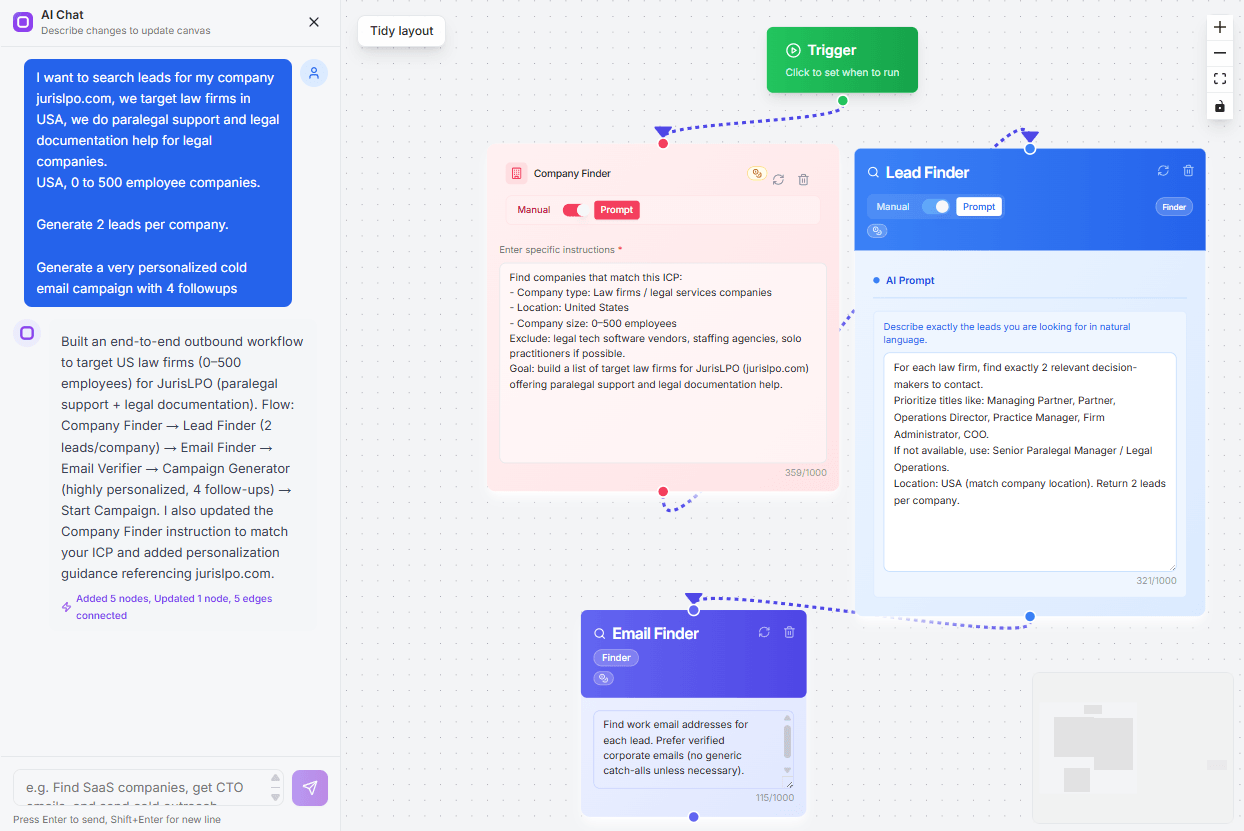
Try Oppora AI
Create Self-Running Agentic Sales Workflows like N8N just by chatting with AI
Get Started for FREE
Finding aviation buyers on LinkedIn is not like prospecting in everyday B2B markets.
You are dealing with technical teams, procurement layers, operators, maintenance leaders, executives, and buyers who rarely respond to generic pitches.
That means you need more than a list of company names.
You need a clear way to find the right people, understand what matters to them, and start conversations without sounding random.
In this guide, you’ll learn how to:
Aviation is not a market where one message lands and the deal moves forward.
You are usually selling into a highly regulated, operationally complex environment where every buying decision affects safety, cost, compliance, and performance.
That makes aviation prospecting slower, more layered, and more relationship-driven than many other B2B industries.
In aviation, one buyer rarely makes the full decision alone.
A vendor, software, service, or equipment purchase may involve procurement, operations, engineering, maintenance, finance, safety, and executive leadership.
Each person looks at the deal from a different angle.
One team may care about reliability. Another may focus on compliance. Another may only care about cost, risk, and implementation time.
So your LinkedIn prospecting cannot depend on reaching one senior executive and hoping they pass your message around.
You need to understand the full buying committee and build conversations with multiple stakeholders.
Aviation decision makers are not always publicly visible or active online.
Many operators, MRO companies, charter businesses, airports, and aviation service providers have lean teams where key people are busy managing daily operations.
They may not post regularly on LinkedIn, and their job titles may not clearly show their buying power.
That means you need sharper research before reaching out.
Before you start searching LinkedIn, you need to know exactly who you are looking for.
Aviation is too broad to prospect randomly.
A charter operator, MRO provider, airport authority, aircraft parts distributor, aviation software company, and private jet management firm may all sit inside the same industry.
But they do not buy the same way.
So the stronger your strategy is before the search begins, the easier it becomes to find the right accounts and avoid wasting time on poor-fit leads.
Suggested Reading:
How to Use LinkedIn Advanced Search to Find Your Ideal Prospects FasterStart by narrowing down the type of aviation company you want to reach.
Think about company category, fleet size, location, service model, revenue range, and operational needs.
You can also define your ICP by the problem you solve.
If you sell maintenance software, your best-fit accounts may be MRO companies or operators with growing fleets.
If you sell staffing services, you may target airlines, airports, or aviation service companies hiring technical talent.
A clear ICP helps you search LinkedIn with purpose instead of collecting random profiles.
In aviation, the person with the biggest title is not always the person shaping the buying decision.
A COO may approve the purchase, but the maintenance director, operations manager, safety lead, or procurement head may influence the final choice.
That is why you should map both decision makers and influencers.
This gives you more entry points into the account and helps you shape messages that match each person’s priorities.
Once your ICP is clear, look for signs that a company may need your solution.
These signals can include fleet expansion, new routes, hiring activity, airport partnerships, funding, new contracts, or leadership changes.
These details make your outreach more relevant.
Instead of saying, “I wanted to connect,” you can start with a real business reason that makes the conversation feel timely.
Once your ICP and buying signals are clear, LinkedIn becomes much easier to use.
You are no longer typing random aviation keywords and hoping the right person appears.
Now you can search with intent, build account lists, and reach people with messages that actually match their role, company, and business priorities.
Manual prospecting can slow you down when you are dealing with a niche industry like aviation.
You may find one company, then spend another 20 minutes checking employees, validating emails, and deciding who to contact first.
Oppora.ai helps you move faster by finding relevant companies, identifying decision makers, enriching lead data, and helping you build outreach workflows from one place.
This is useful when you want to target aviation segments like MRO companies, private jet operators, aircraft parts suppliers, airport service providers, or aviation staffing firms.
Instead of jumping between tools, you can use Oppora.ai to find leads, verify contact details, personalize outreach, and sync activity to your CRM.
Many aviation deals are influenced below the executive level.
So if you only search for CEOs, presidents, or founders, you may miss the people who actually understand the operational pain.
Use aviation-specific titles that match the problem you solve.
These may include:
Director of Maintenance
VP of Operations
Head of Procurement
Aviation Safety Manager
Fleet Manager
Ground Operations Manager
MRO Manager
Technical Services Director
These people may not sign the final contract, but they can open the door and influence the buying process.
LinkedIn Sales Navigator can help you avoid broad, messy searches.
You can filter by industry, company size, geography, seniority level, function, keywords, and posted content.
For aviation prospecting, combine filters carefully.
You might search for aviation companies in a specific region, then filter people by operations, maintenance, procurement, or engineering roles.
You can also save leads and accounts so you can monitor future updates.
The goal is not just to find more prospects.
The goal is to find better-fit prospects with less manual cleanup.
Suggested Reading:
How to Use LinkedIn Sales Navigator Advanced Search (+Full Filter List)Aviation buyers often show up around industry events, trade shows, expos, and conferences.
These events can reveal companies that are actively investing, networking, launching services, or exploring new vendor relationships.
Search LinkedIn for event names, speaker lists, attendee posts, exhibitor announcements, and company updates.
When someone posts about attending or exhibiting at an aviation event, it gives you a natural reason to connect.
Your message feels warmer because it is tied to something current and relevant.
Instead of pitching immediately, you can start by referencing the event and asking a thoughtful question.
Not every aviation company is ready to buy right now.
That is why buying signals matter.
Look for companies announcing fleet expansion, new routes, new aircraft, hiring growth, airport partnerships, maintenance capacity expansion, or new service locations.
These changes often create operational pressure.
A company adding aircraft may need better maintenance workflows, staffing support, parts sourcing, compliance tools, or vendor relationships.
When you connect your outreach to that change, your message feels more useful.
You are not just another seller asking for time.
You are reaching out because something in their business suggests a real need.
Aviation is a relationship-heavy industry, and trust matters.
If you share a mutual connection with a prospect, use that carefully.
You do not always need to ask for a formal introduction.
Sometimes, simply mentioning a shared connection, shared community, or common industry background can make your message feel less cold.
You can also look at people who engage with the same aviation leaders, associations, or company pages.
These small overlaps help you build context before reaching out.
A warm path is usually stronger than a perfect cold pitch.
LinkedIn groups can help you find people who do not appear in your first search.
Aviation professionals often join groups around maintenance, safety, airport operations, private aviation, aircraft sales, logistics, and aerospace technology.
Look for members who comment thoughtfully, ask operational questions, or share industry updates.
These people may be closer to the problem than senior executives who rarely use LinkedIn.
You can also use groups to understand the language your buyers use.
That makes your outreach sound more relevant and less like a generic sales template.
Your competitors’ LinkedIn activity can reveal useful prospecting clues.
Look at who follows them, engages with their posts, comments on their updates, or appears in their customer announcements.
You are not copying their audience blindly.
You are looking for patterns.
Which aviation segments engage most? Which job titles appear often? Which company types seem interested in similar solutions?
These patterns can help you build a stronger prospect list.
They can also show you where demand already exists, so you do not waste time educating the wrong market.
In aviation sales, one contact is rarely enough.
If your first message goes to the wrong person, the opportunity may disappear even if the company is a strong fit.
Build small account maps for each target company.
You might include one senior leader, one operations contact, one procurement contact, and one technical influencer.
Each person should receive a message that matches their role.
Procurement may care about cost and vendor reliability.
Operations may care about speed, efficiency, and risk reduction.
Technical teams may care about implementation, compatibility, and accuracy.
LinkedIn is great for research and relationship-building, but not every buyer checks messages regularly.
That is why it often works better when paired with verified business emails.
You can use LinkedIn to understand the person, company, and context.
Then you can use email to send a clearer, more direct message.
This does not mean spamming both channels with the same pitch.
It means creating a coordinated outreach flow where LinkedIn adds familiarity and email gives you another professional touchpoint.
Before sending, make sure your email addresses are verified so you avoid bounces and protect deliverability.
Aviation buyers are careful because their decisions can affect safety, service quality, compliance, and operational performance.
So your first message should not feel like a hard pitch.
Start by showing that you understand their world.
Engage with their posts, mention a relevant company update, ask a practical question, or share a useful observation.
When the timing is right, introduce your offer in a way that connects to their priorities.
The best LinkedIn prospecting does not feel like chasing.
It feels like creating a business conversation the buyer actually wants to continue.
Even with a strong LinkedIn strategy, small mistakes can quietly hurt your results.
In aviation, buyers are busy, cautious, and often hard to reach. So if your targeting or messaging feels weak, they may ignore you before the conversation even starts.
It is tempting to go straight after CEOs, founders, or presidents.
But in aviation, senior leaders are often not the first people reviewing new vendors or solutions.
Many deals are shaped by people closer to operations, maintenance, procurement, and safety.
To avoid missing qualified leads, you should also target:
If you only target the top, you may miss the people closest to the real problem.
A generic LinkedIn request is easy to ignore.
Messages like “I’d love to connect” or “I help aviation companies grow” do not give the buyer a strong reason to respond.
Your request should show that you know who they are and why the conversation matters.
Before sending a connection request, personalize it with:
Even one specific detail can make your outreach feel more thoughtful.
Suggested Reading:
How Does LinkedIn Connection Levels Works?Aviation buying decisions often depend on technical trust.
If your solution affects maintenance, compliance, safety, staffing, scheduling, logistics, or operations, technical stakeholders matter.
They may not control the full budget, but they can support or block your deal.
These stakeholders usually care about:
Bring them into your prospecting early so you understand the full buying picture.
Aviation companies can look similar from the outside.
But a private jet operator, cargo airline, MRO provider, and airport services company all have different priorities. If your message does not reflect that, it will feel random.
Before reaching out, research details like:
This research helps you write messages that feel relevant instead of copied.
Many aviation buyers will not reply to your first message.
That does not always mean they are not interested. They may be traveling, handling urgent operations, or waiting for the right time to respond.
A stronger follow-up should include:
A good follow-up should feel helpful, not pushy.
LinkedIn prospecting for aviation works best when you stop treating it like a volume game.
You are not just looking for names.
You are trying to understand the account, map the buying committee, spot the right timing, and start conversations with people who actually influence the deal.
That means your strategy should combine smart LinkedIn research, aviation-specific job titles, buying signals, warm connections, and verified email outreach.
When you do this well, you do not need to chase every company in the market. You can focus on the aviation buyers most likely to need what you offer.
And if you want to make that process easier, Oppora.ai can help you find aviation companies, identify decision makers, verify contacts, personalize outreach, and manage follow-ups in one workflow.
So instead of spending hours jumping between tools, you can focus on building the right conversations.
LinkedIn prospecting for aviation means using LinkedIn to find, research, and connect with aviation buyers like operators, MRO leaders, airport teams, and procurement contacts.
Start with aviation companies, then search for people in operations, maintenance, procurement, safety, engineering, and leadership roles.
Target roles like Director of Maintenance, VP of Operations, Head of Procurement, Fleet Manager, MRO Manager, Aviation Safety Manager, and COO.
You can use a tool like Oppora.ai to find leads, enrich data, verify contacts, personalize outreach, manage replies, and sync everything to your CRM.
Yes. Use LinkedIn for research and relationship-building, then use verified business emails for direct, personalized follow-ups.
Summarize with AI
Share