Home
Blog
Oppora’s Claude MCP is Live. Connect our Email Database & Outreach features with any tool to build smart automations inside Claude.
Home
Blog
Adam Hossain
Published June 25, 2026
19 min

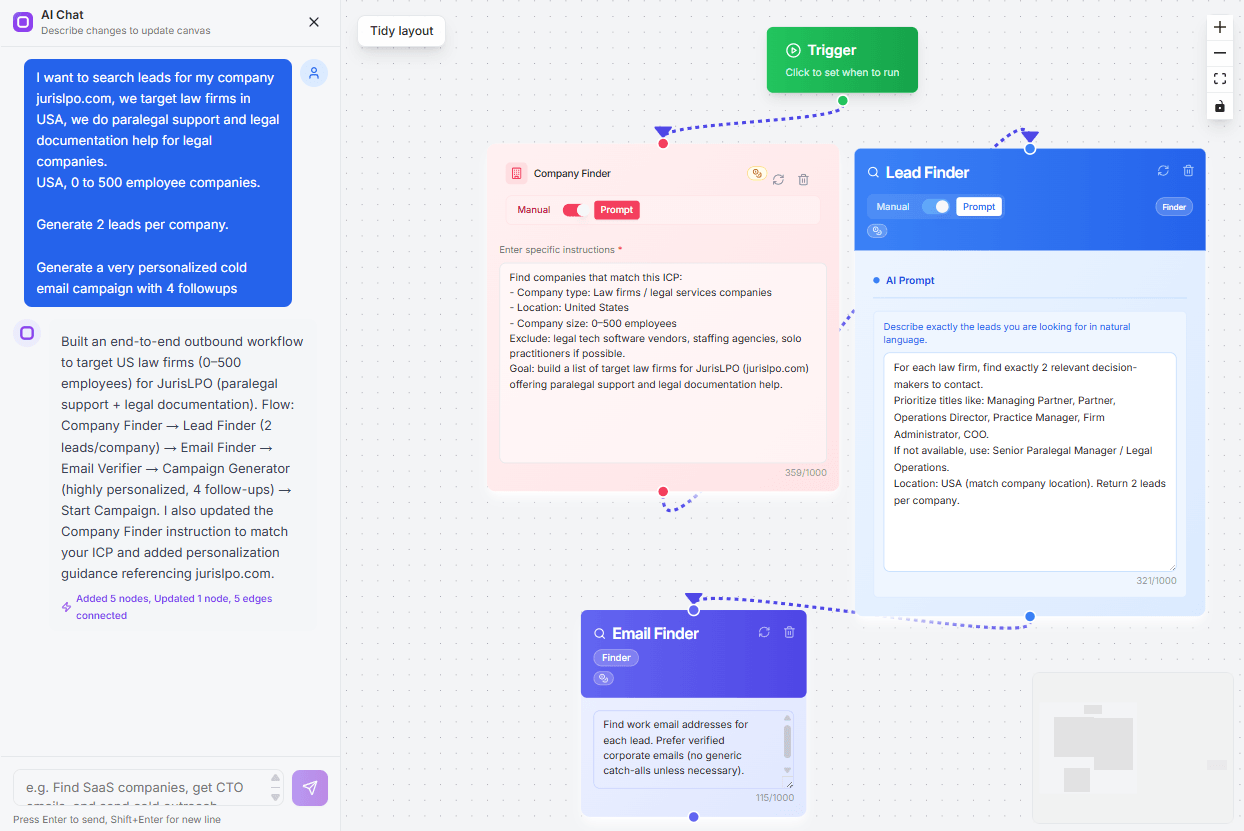
Try Oppora AI
Create Self-Running Agentic Sales Workflows like N8N just by chatting with AI
Get Started for FREE
Your email list is your most valuable asset—but only if the addresses are actually valid.
A single unverified list tanks your deliverability, damages your sender reputation, and wastes thousands on bounces and invalid contacts.
The catch? Most email verification tools often cost thousands per month, especially when you're just getting started.
Here's the good news: you don't need to break the bank for accuracy.
In this guide, we'll walk you through the 13 cheapest email verification tools that maintain real accuracy. We'll cover:
Let's find you a solution that fits your budget and your standards.
We didn't just pick the cheapest tools and call it a day. Real accuracy at a low price requires a fair, transparent evaluation system.
Below is exactly how we tested and ranked each tool so you can trust our recommendations.
Accuracy is everything when you're relying on email verification. We tested each tool against a benchmark dataset containing:
We measured both false positive rates (marking valid emails as bad) and false negatives (missing invalid emails). A cheap tool that kills your good leads isn't a bargain—it's expensive.
Cost matters, but cost alone is meaningless. We evaluated pricing by breaking down the true cost per verified email across different volume tiers.
This showed us which tools scale fairly and which ones price-gouge at higher volumes.
We also factored in free trials, credit rollover policies, and whether you can run smaller batches without overpaying for bulk packages that don't fit your needs.
Real-world usability separates the winners from the rest. We checked API documentation quality, native integrations with popular CRMs and email platforms, and ease of setup.
A cheap tool that's impossible to integrate wastes your team's time debugging connections instead of cleaning data.
We also evaluated feature sets—bounce categorization, duplicate detection, and custom workflows—to see if basic pricing tiers actually deliver what you need.
Speed tests mattered too. We ran batch verifications and measured response times for API calls.
We also tracked uptime and reliability over several weeks to catch tools that struggle during peak usage.
A verification tool that crashes when you need it most, or that takes days to process lists, defeats the purpose of automation.
We made sure the cheap options could keep pace with actual demand.
Suggested Reading:
Email Address Verification: Top Tools and Free Online Options for 2026Before diving into each tool individually, here's a snapshot of how the 13 platforms stack up.
We've calculated the cost to verify 10,000 emails and highlighted the key verification, lead search, and outreach capabilities that matter.
Key Takeaway: Cost alone doesn't determine value. Oppora costs more but combines verification with lead discovery and full outreach automation.
ZeroBounce and NeverBounce offer the best accuracy-to-cost ratio for pure verification. Budget tools like Pabbly and Bulk Email Checker handle basic validation but lack advanced detection.
Below are the 13 cheapest email verification tools we tested and carefully ranked by overall value.
Each entry breaks down pricing, accuracy performance, and key strengths so you can compare them side-by-side effectively.
We've ranked them by carefully balancing cost, features, and real-world reliability performance.
You'll find solid options for every single budget level, from startups testing their first campaigns to established agencies handling massive email lists at scale daily.

Oppora is more than just an email verification tool it's a full-stack AI sales platform.
Think of Oppora as your AI sales assistant that handles the entire outbound workflow:
finding leads, enriching their contact data, writing personalized emails, sending them across multiple mailboxes, and even replying to responses.
But here's what matters for verification: it includes built-in email validation as part of its contact discovery system, meaning you're verifying contacts in real time as you build list without spending separate credit for finding email and verifying it.
Also, if you have your own email list, you can just upload it and verify all of them with Oppora’s built in email verification system and even enrich it with the right one..
Oppora's verification engine uses multiple data sources layered together, so you're not relying on a single provider.
This waterfall approach catches more valid emails and flags risky ones. Real-time verification happens as you search, meaning fresher data than batch-checked lists.
(Note: Data Credits can be used for Verifying emails as well and verifying one email costs 1 data credit for uploaded contacts and zero credits for emails found through Oppora itself.)
ZeroBounce is a dedicated email verification platform built specifically for one job: cleaning email lists.
It's straightforward and focused—no extra features, just pure verification at scale.
ZeroBounce uses a combination of syntax validation, domain checks, and SMTP testing to verify emails.
Their AI model catches risky patterns, including spam traps and role-based addresses.
Accuracy rates consistently hover around 98%, making it reliable for serious outreach.
ZeroBounce offers a pay-as-you-go model starting at $0.01 per verification. For high-volume users, monthly plans begin around $20 for 10,000 verifications.
No setup fees, no monthly minimums if you use credits—making it ideal for teams testing or starting small.
EmailListVerify strips away the complexity and keeps costs low.
It's built for teams who need straightforward verification without enterprise-level features or hefty monthly bills.
EmailListVerify uses SMTP checks and machine learning to validate emails. It flags invalid addresses, spam traps, and role-based emails effectively.
While not as advanced as premium tools, it catches the obvious bad data—bounces, syntax errors, and inactive domains—with solid 95%+ accuracy.
EmailListVerify keeps pricing simple: you pay per verification with no monthly commitments. Costs start around $0.005 per email on higher-volume plans.
A bulk verification of 10,000 emails runs roughly $50. It's one of the cheapest options available, making it perfect for solopreneurs testing campaigns.
NeverBounce combines speed with accuracy.
It's designed for marketing teams and agencies that need reliable verification without waiting days for results or breaking the budget.
NeverBounce uses a multi-layered verification system: syntax checking, domain validation, and mailbox testing.
It's known for catching soft bounces and identifying risky emails before they damage your sender reputation.
Their accuracy rates typically exceed 98%, and they provide a confidence score for each result.
NeverBounce operates on a credit system. You buy credits and use them per verification—roughly $0.01 to $0.02 per email depending on volume.
Monthly subscriptions start around $25 for smaller lists. They also offer annual discounts, making it cost-effective if you're cleaning lists regularly.

Clearout positions itself as an affordable verification tool with built-in data enrichment.
You're not just validating emails you're also getting contact details, company info, and social profiles in the same verification process.
Clearout uses SMTP validation combined with machine learning to verify emails. It's solid at catching bounces and invalid addresses, with accuracy rates around 96-97%.
The enrichment data adds value—you're not just validating, you're building more complete profiles.
Clearout offers flexible pricing starting at $0.008 per verification on bulk plans. Monthly subscriptions begin around $29 for 5,000 verifications.
They also provide a free tier with limited credits, perfect for testing before committing. Yearly plans offer 20-30% discounts.
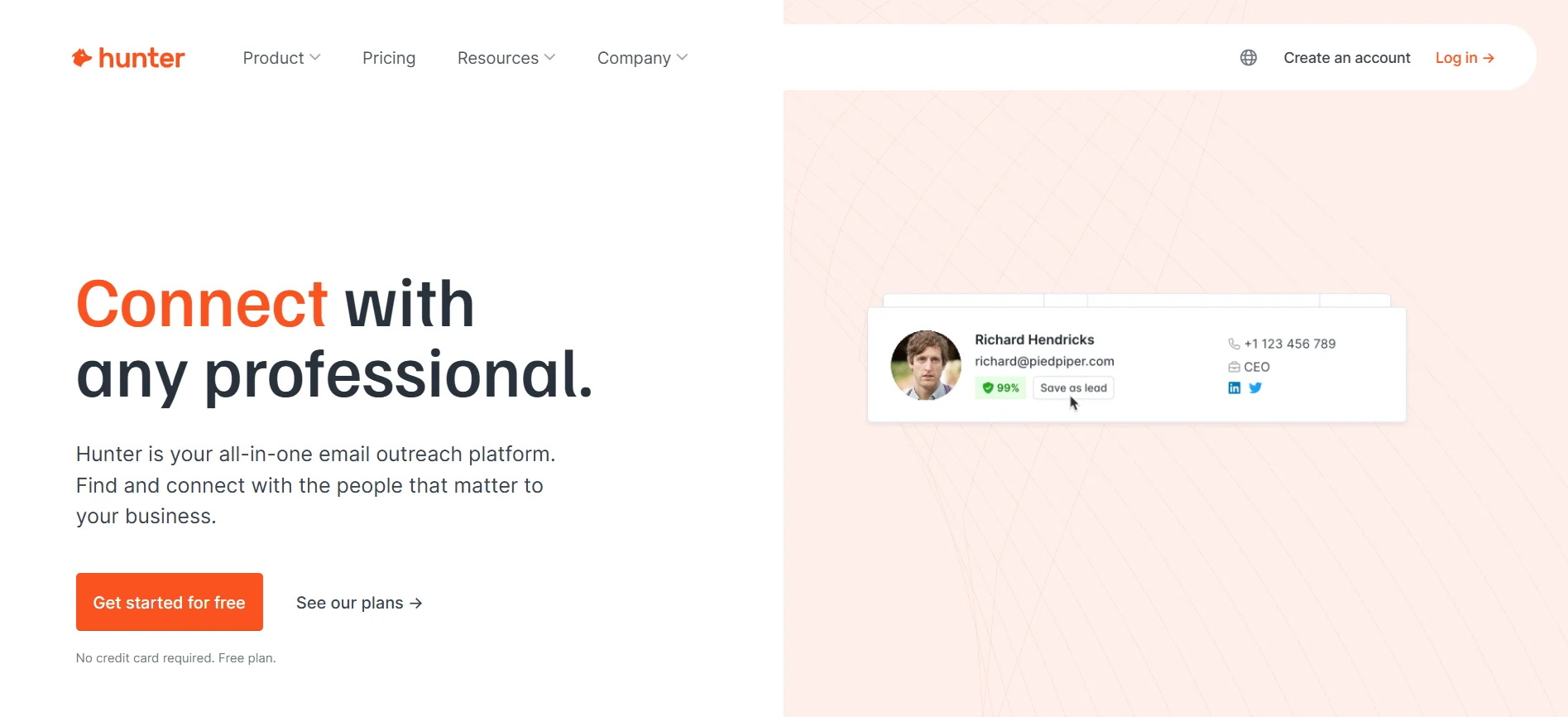
Hunter Verifier is built into Hunter.io's ecosystem.
It's not a standalone verification tool—it's integrated with their email finder, so you're discovering emails and validating them in one workflow rather than juggling separate platforms.
Hunter Verifier uses SMTP checks and mailbox validation. Since it works alongside their email finder, results are reasonably accurate—around 95-96%.
However, it's not as comprehensive as dedicated verification-only tools. The real strength is convenience: find and verify in one platform.
Hunter operates on a credit system. Finding an email costs credits, and verifying costs additional credits.
Monthly plans start around $99 and include both finding and verification credits. If you're already using Hunter for prospecting, adding verification is seamless and economical.
Suggested Reading:
13 Hunter.io Alternatives That Find More Verified Emails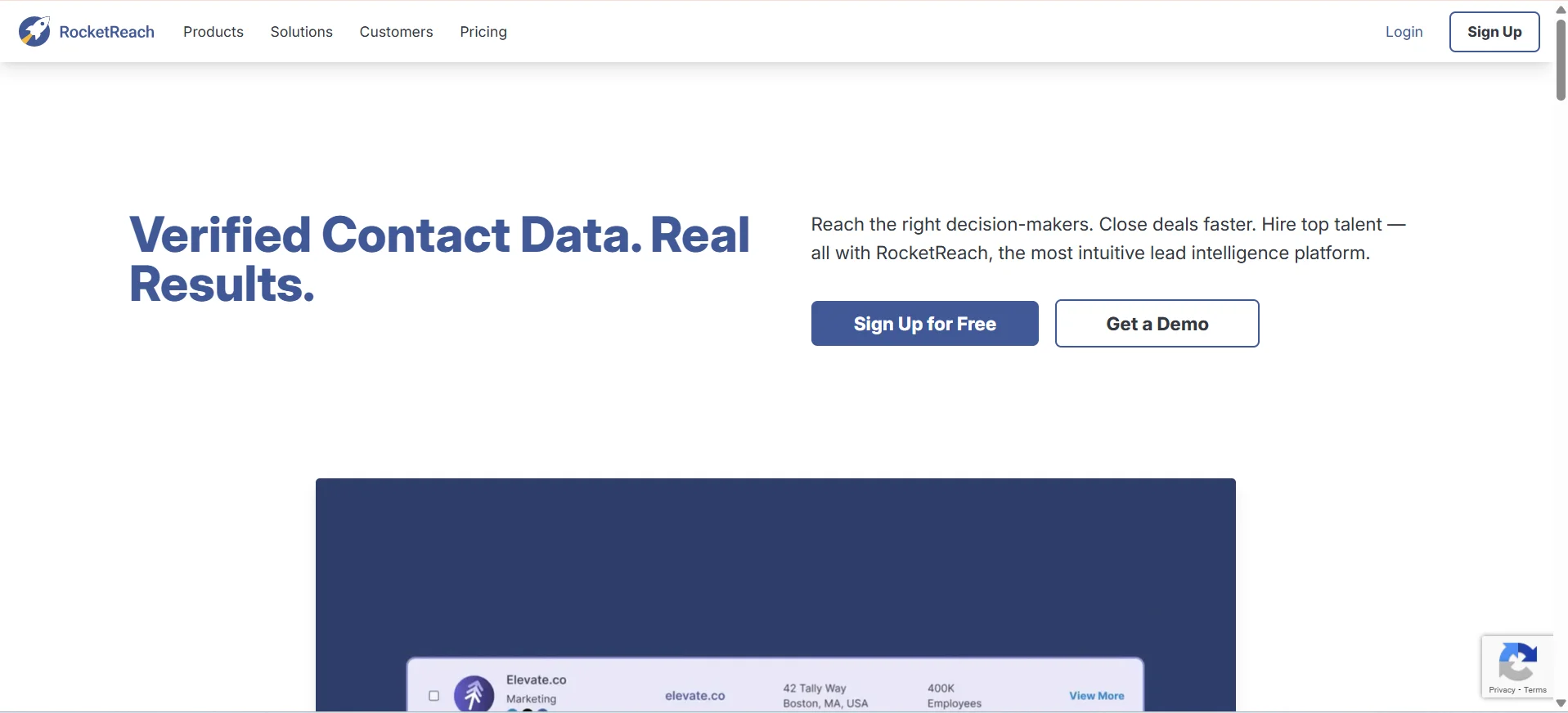
RocketReach Verify works within RocketReach's B2B prospecting platform.
Like Hunter, it's not a standalone verification tool—it's part of a larger ecosystem where you find decision-maker contacts and verify them simultaneously.
RocketReach Verify uses SMTP testing and mailbox validation. Accuracy sits around 94-95%, which is respectable but not industry-leading.
The advantage is data richness—emails come with verified phone numbers and LinkedIn profiles, giving you more context per contact.
RocketReach uses a credit-based system. Monthly plans start around $199 and include both prospecting and verification credits. You're paying for the full platform, not just verification.
It's pricier than dedicated verification tools but valuable if you need complete B2B contact data.
Suggested Reading:
10 RocketReach Alternatives With Email Verification & EnrichmentLeadiro is an email verification and lead validation platform built for sales teams.
It combines verification with enrichment data, so you're cleaning your list while simultaneously gathering additional contact information.
Leadiro uses multi-point validation to verify emails—syntax checking, domain validation, and mailbox testing.
Accuracy rates hover around 95-96%.
What sets it apart is the enrichment layer: verified emails come with job titles, company info, and phone numbers, giving you richer prospect data.
Leadiro offers pay-as-you-go pricing starting around $0.009 per verification. Monthly plans begin around $39 for smaller volumes.
They also offer tiered discounts for annual commitments. The pricing is competitive, especially when factoring in the enrichment data included with each verification.
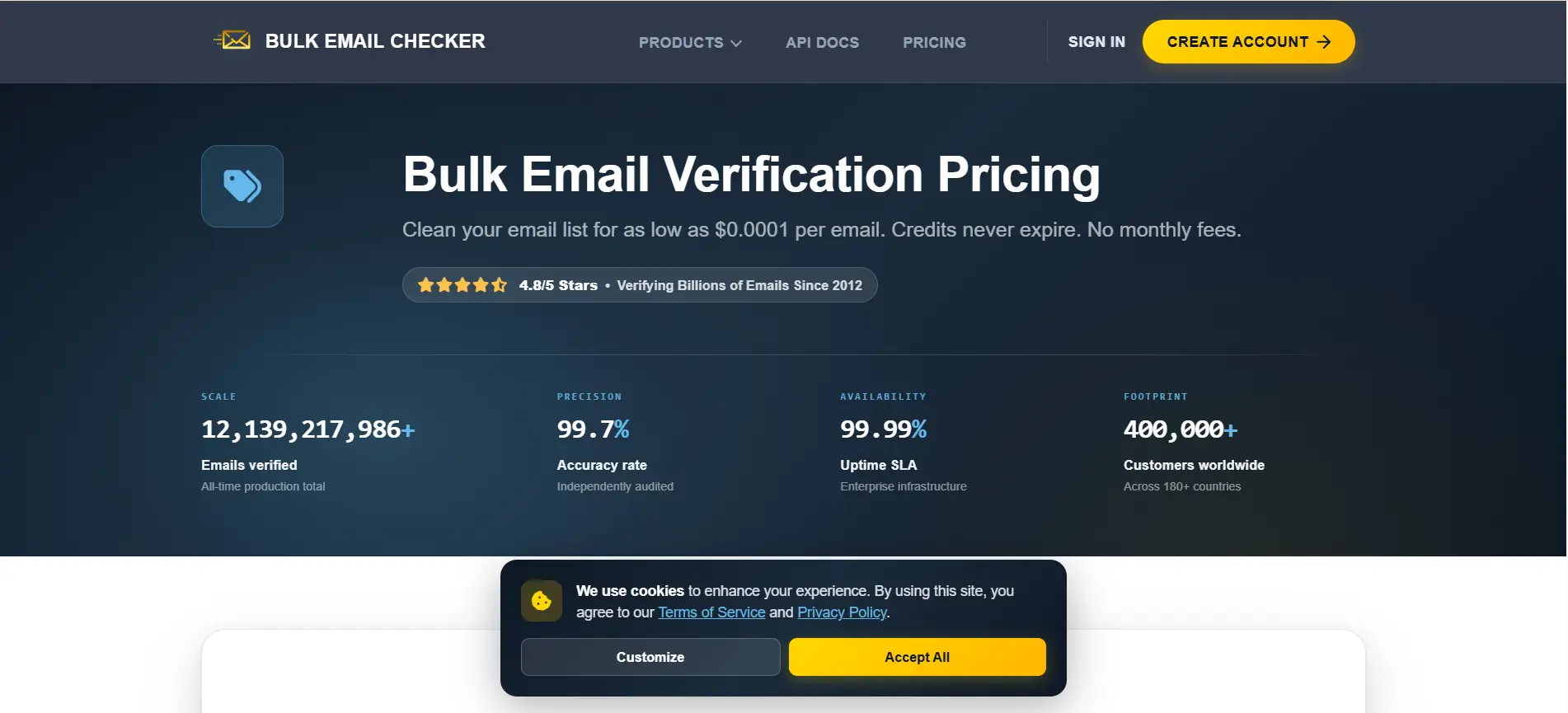
Bulk Email Checker is stripped-down simplicity.
No fancy dashboard, no enrichment data, no integrations—just a straightforward tool that validates email addresses in bulk.
It's ideal for anyone who needs quick, cheap verification without extra bells and whistles.
Bulk Email Checker uses basic SMTP validation and domain checks.
Accuracy rates range around 92-94%—decent for catching obvious bounces and invalid addresses, but less sophisticated than premium tools.
It won't catch all risky emails, but it handles the fundamentals well.
Bulk Email Checker keeps costs minimal. You pay per verification, typically around $0.003 to $0.005 per email depending on volume.
A list of 10,000 emails costs roughly $30-50. There are no monthly subscriptions or hidden fees—pure pay-as-you-go simplicity.
Verify Email by SendGrid is purpose-built for teams already using SendGrid's email delivery platform.
It's not a standalone tool—it integrates directly into your SendGrid account, so verification happens as part of your sending workflow rather than as a separate process.
SendGrid Verify Email uses SMTP testing to validate addresses.
Accuracy rates are solid—around 96-97%—and improve when integrated with SendGrid's sending infrastructure.
The tool learns from bounce data, so accuracy improves over time based on your actual sending patterns.
Pricing depends on your SendGrid plan. If you're already a SendGrid customer, verification is often included.
For standalone use, costs start around $0.01 per verification. Monthly plans begin around $50. It's economical if you're already sending through SendGrid.
MyEmailVerifier is a budget-focused email validation tool aimed at solopreneurs and small teams.
It doesn't try to do everything—it focuses on doing verification well while keeping costs as low as possible.
MyEmailVerifier uses SMTP validation to test emails. Accuracy hovers around 93-94%, which works fine for standard list cleaning.
It catches bounces and obvious invalid addresses reliably, though it may miss some edge cases that more advanced tools catch.
MyEmailVerifier keeps pricing dirt cheap. You pay roughly $0.002 to $0.004 per verification depending on volume.
A bulk list of 10,000 emails costs around $20-40. Monthly plans start around $15 for smaller volumes.
There's no commitment required, making it perfect for testing or occasional use.
Bouncer positions itself as a simple, affordable email verification service.
It's designed for marketing teams and sales professionals who need reliable list cleaning without overpaying for features they don't use.
Bouncer uses SMTP testing and mailbox validation to verify emails. Accuracy rates sit around 95-96%, making it reliable for most outreach campaigns.
The confidence scoring helps you identify which results to trust most, so you can prioritize higher-confidence contacts.
Bouncer offers both pay-as-you-go and monthly plans. Per-verification costs range around $0.005 to $0.01 depending on volume.
Monthly subscriptions start around $29 for 5,000 verifications. Annual plans offer 25-30% savings, making it competitive for teams committed to regular list cleaning.

Pabbly Email Verification is part of the larger Pabbly suite of business automation tools.
If you're already using Pabbly for email marketing or CRM, adding verification is seamless.
If not, it still stands alone as a genuinely cheap verification option.
Pabbly uses SMTP validation to verify emails. Accuracy rates are around 94-95%, which handles standard list cleaning effectively.
It catches bounces and syntax errors reliably, though it's less sophisticated than premium tools at catching complex risky patterns.
Pabbly is aggressively affordable. Monthly plans start around $5 for 1,000 verifications. Paying per verification runs roughly $0.002 to $0.005 per email.
Annual plans offer significant discounts. For cost-conscious solopreneurs, Pabbly is one of the cheapest options available without sacrificing basic functionality.
Picking the right tool depends on what you actually need to accomplish. Cost matters, but it's not the only factor.
Your workflow, team size, and integration requirements should guide your choice more than price alone.
As a startup, you're testing assumptions and minimizing burn. You need verification that's dirt cheap and doesn't require monthly contracts.
Look for:
Pabbly, Bulk Email Checker, and MyEmailVerifier are perfect fits. They handle the fundamentals without bloated features.
Start with Pabbly's $5/month plan and scale up only when you're sending serious volume. You'll validate lists without committing to enterprise-level spend.
Agencies need reliability and integration. You're running multiple client campaigns, so accuracy and CRM sync matter as much as cost.
Prioritize:
ZeroBounce and NeverBounce fit well here. They're affordable but robust enough for agency workflows. You can automate list cleaning into client onboarding without manual steps.
Sales teams need speed and accuracy. Bad data kills conversion rates, so you can't sacrifice quality for price.
You also need real-time verification as you build campaigns.
Consider:
Oppora works here if you're doing full outreach automation. Otherwise, ZeroBounce offers the speed and accuracy sales teams demand at reasonable cost.
Chasing the lowest price often leads to false economy. You save money upfront but lose it in wasted outreach, poor deliverability, or manual workarounds.
Here are the mistakes that cost you more than you save.
The cheapest tool isn't always the best deal. Pabbly costs $5/month, but if its accuracy is 94% and a competitor's is 97%, you're sending more to spam.
Those wasted sends add up fast.
Compare total cost of ownership, not just verification cost. Factor in:
A $50/month tool that's 98% accurate often outperforms a $10/month tool that's 92% accurate. Your outreach ROI depends more on list quality than tool cost.
Many cheap tools verify that an address exists but don't flag catch-all emails or disposable addresses.
A catch-all domain accepts mail to any address, so verification passes but real people never see your email.
Disposable email services (like Tempmail) create fake addresses for signups. You're wasting sends on contacts who'll never engage.
Tools like ZeroBounce and NeverBounce specifically detect these. Don't skip this feature just to save dollars.
Choosing a tool that doesn't integrate with your CRM forces manual data entry. You verify lists in one platform, then manually import results into HubSpot or Salesforce.
Check before committing:
A $30/month tool that integrates seamlessly beats a $10/month tool requiring manual work every time.
Enterprise features cost money. If you're a solopreneur, you don't need 50-mailbox rotation or white-label options.
Pabbly or Bulk Email Checker handles your needs perfectly.
Conversely, don't cheap out on essentials. Accuracy, catch-all detection, and integration matter. Skip the nice-to-haves, but invest in what directly impacts your outreach success.
Email verification is just the foundation. A clean list matters, but sending matters more.
The cheapest tool in this guide will keep your list healthy—but converting those contacts into replies and meetings requires the right outreach strategy.
Here's the reality: verification alone doesn't drive results. You need a system that finds qualified leads, validates their emails, personalizes outreach, and handles replies automatically.
That's why Oppora stands out. It bundles verification into a complete workflow that handles discovery through meeting booking.
You're not just validating email you're building an automated sales engine that keeps running without daily supervision.
Whether you're using a standalone verification tool or Oppora's integrated system, pick what fits your workflow and commit to consistent outreach. Clean data + smart sending = revenue.
Email addresses decay over time as people change jobs or abandon accounts. Reverify lists quarterly for active campaigns, or before major sends. Inactive lists should be reverified before reengagement. Frequency depends on your sending volume—high-volume senders benefit from more frequent reverification to maintain deliverability.
SMTP validation connects directly to email servers to confirm an address exists. Machine learning analyzes patterns to predict deliverability risk. SMTP is faster but less nuanced. ML catches suspicious patterns SMTP misses. Best tools combine both for comprehensive validation and accuracy.
Yes, but with diminishing returns. Using two tools increases confidence, but the cost multiplies. Most situations are covered by a single quality tool like ZeroBounce or Oppora. Double-verification makes sense only for high-value prospect lists where accuracy is mission-critical and cost isn't a constraint.
Reputable tools encrypt data in transit and at rest. Review their privacy policies and compliance certifications (SOC 2, GDPR). Oppora, ZeroBounce, and major platforms publish security details. Avoid tools lacking transparency. Never use verification services that aren't established or lack clear data handling policies.
Verification removes bounces and spam traps that damage reputation. Lower bounce rates signal to ISPs you're legitimate. Better reputation means higher inbox placement and fewer blocks. Clean lists maintained through regular verification are your best defense against spam folder traps.
Summarize with AI
Share