Home
Blog
Find 500 B2B Contacts for Free Every Month with Built-In Outreach.
Home
Blog
Adam Hossain
Published June 16, 2026
17 min
Try Oppora AI
Create Self-Running Agentic Sales Workflows like N8N just by chatting with AI
Get Started for FREE
Your sales team is dialing numbers that no longer work, reaching gatekeepers instead of decision-makers, or worse — hitting dead ends on every third call. Sound familiar?
The problem usually isn't your pitch. It's your data.
A reliable business phone number list is what separates outbound teams that consistently book meetings from those that spend half their day chasing bad contacts.
But not every provider gives you verified, up-to-date numbers that actually connect.
In this guide, we'll cover:
Not every provider that claims to offer "verified business phone numbers" actually delivers on that promise.
Some have massive databases but poor refresh cycles. Others have great filtering but limited coverage. Knowing what to look for before you commit saves you from expensive mistakes.
This is the most important feature to evaluate — and the most commonly oversold.
Direct dials connect you straight to the person, bypassing switchboards and gatekeepers entirely. Mobile numbers give you another channel when desk lines go unanswered.
The key question to ask any provider is: how are these numbers verified, and how recently?
A number that was valid six months ago may not be today. Look for providers that use multi-step verification, not just automated syntax checks.
A large database is only useful if you can slice it precisely.
The best phone data providers let you filter by:
The more granular your filtering, the more relevant your business phone number list becomes — and the higher your connection and conversion rates will follow.
Even the most carefully built B2B contact database degrades over time. People change roles, companies downsize, and numbers get reassigned.
What separates good providers from great ones is how aggressively they maintain their data.
Ask about their refresh cycles — monthly updates are far more reliable than quarterly or annual ones.
Also look for real-time verification capabilities, where numbers are cross-checked at the point of export rather than only at the point of collection.
Suggested Reading:
10 Best B2B Phone Number Finder Platforms Compared (2026)Phone numbers alone rarely tell the full story.
The strongest providers pair phone data with enrichment layers — giving you context around each contact like their LinkedIn profile, recent company activity, buying intent signals, or tech stack.
This turns a plain business phone number list into a prioritized, insight-rich prospecting asset your reps can actually work with efficiently.
Your data is only as useful as how fast it flows into your workflow.
Look for providers that offer native integrations with tools like HubSpot, Salesforce, Pipedrive, or your outreach platform of choice.
Seamless sync means your reps spend less time on data entry and more time on actual selling.
Manual exports and CSV uploads slow everything down — and slow teams lose deals.
Finding the right provider comes down to more than just database size.
The platforms below have been evaluated across data quality, verification methods, filtering capabilities, enrichment depth, and how well they fit into real sales workflows.
Whether you're a solo founder or running a full SDR team, there's an option here that matches where you are and where you're headed.
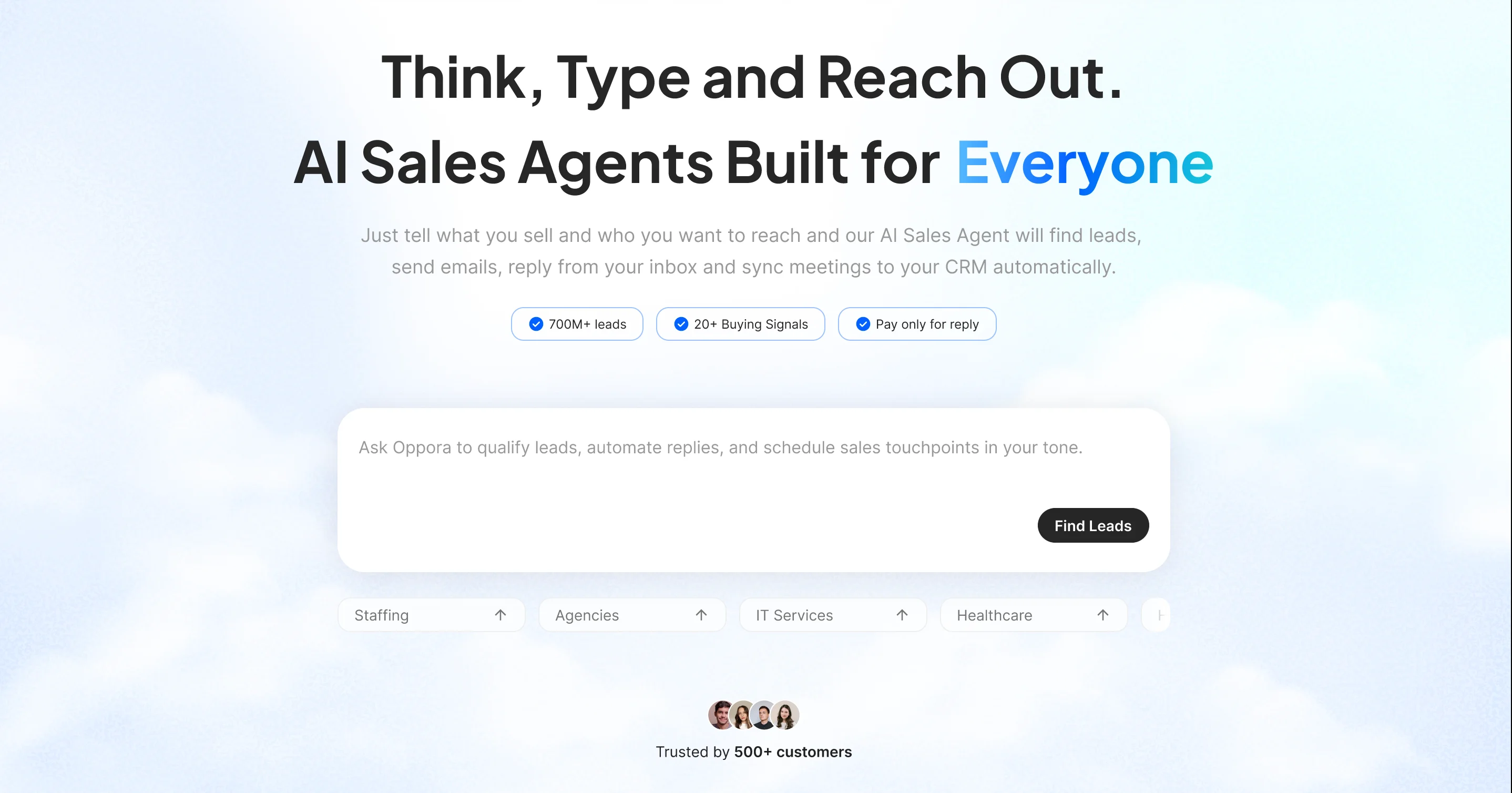
Most tools on this list give you one thing: a database you can pull numbers from.
Oppora gives you something different — a complete phone-to-pipeline system where finding a verified phone number is just the starting point, not the finish line.
At core it is an AI-powered outbound sales agent that helps you find verified prospects, build targeted lead lists, enrich contact data, and launch outreach campaigns from a single platform.
Oppora lets you build phone number lists using either manual filters or AI-powered prospecting.
You can manually define your target audience using filters like industry, job title, seniority, company size, revenue, location, and buying signals.
And if you're unsure which filters to use, simply describe your ideal customer and let AI build the search for you.
For example, "Find founders of US-based SaaS companies with 20-200 employees that are actively hiring sales reps."
You can also automate prospecting with AI workflows.
For example, trigger a workflow every day at 9 AM to find companies that started hiring SDRs in the last 7 days, identify founders or sales leaders, enrich their contact details, score them with AI, and add verified phone numbers to a dedicated list automatically.
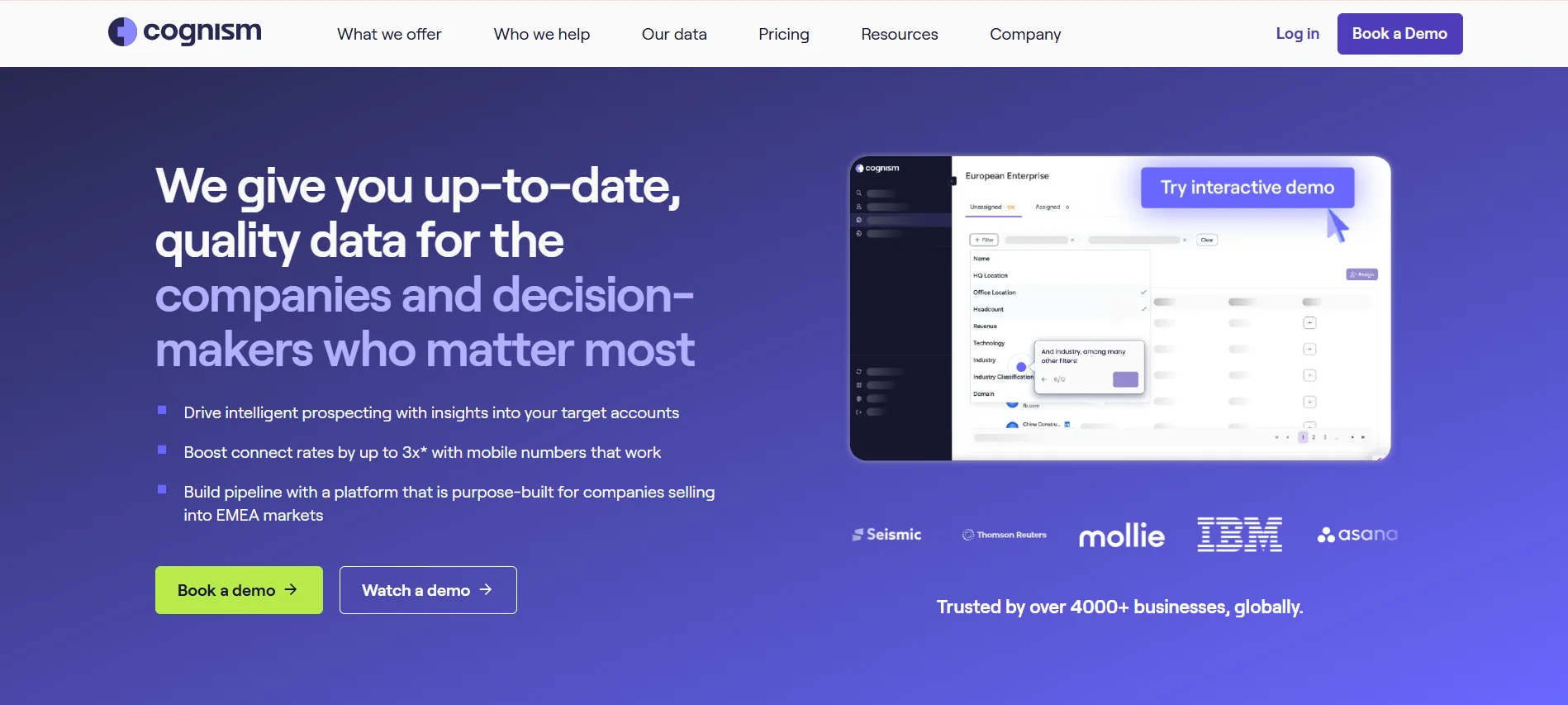
Cognism is one of the most recognized names in B2B phone data, particularly for teams targeting European and North American markets.
Its biggest differentiator is what it calls "Diamond Data" — a subset of mobile numbers that are phone-verified by a human team before being released.
That extra verification step means fewer dead ends when your reps are dialing.
Cognism lets you filter by persona, geography, and company attributes to pull a targeted list of contacts with verified mobile numbers — making it particularly strong for teams where compliance and call connection rates both matter.
Cognism uses custom pricing based on team size and usage volume. No public pricing is listed — you'll need to request a demo to get a quote.
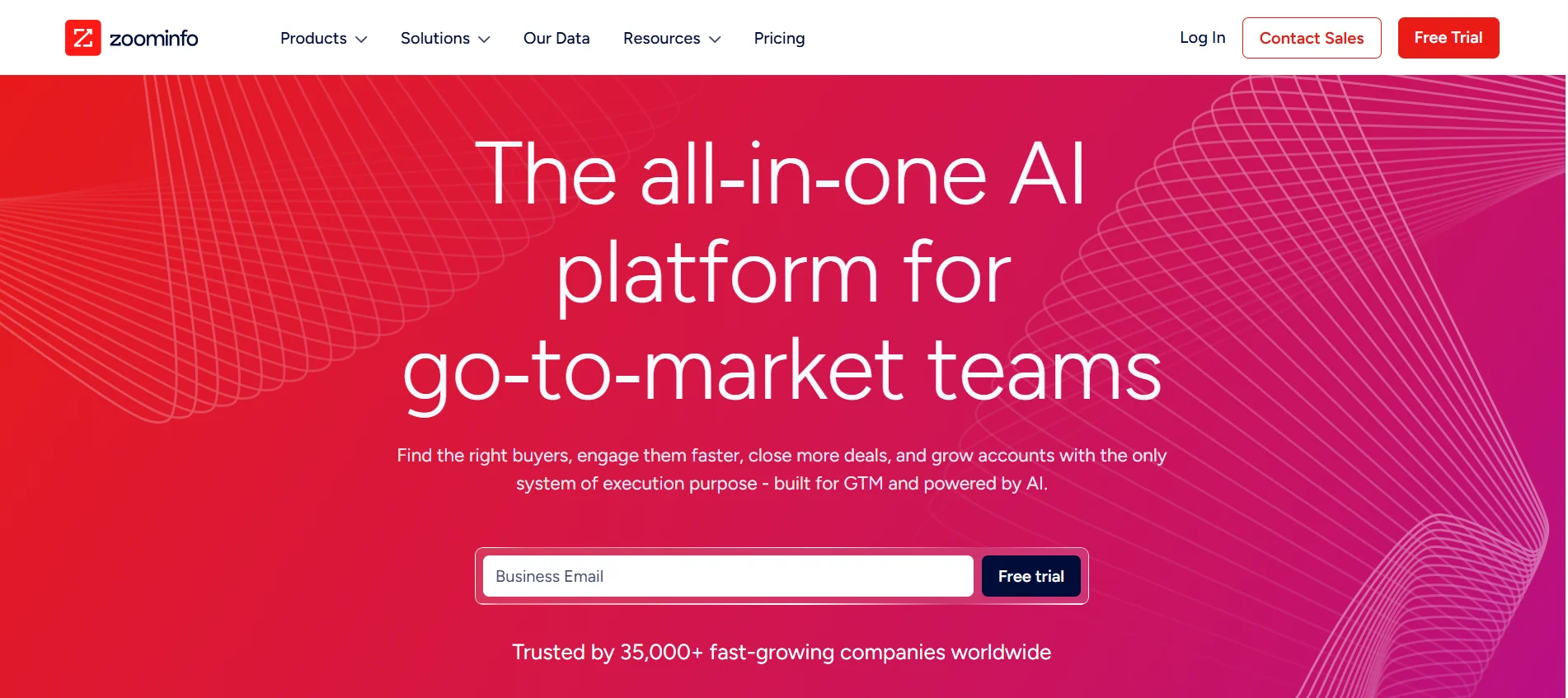
ZoomInfo is one of the largest B2B contact databases on the market, and for many enterprise sales teams, it's been the default choice for years.
Its strength lies in sheer coverage — a vast database of business phone numbers, direct dials, and company intelligence that's hard to match at scale.
ZoomInfo lets you build highly segmented prospect lists using layered filters — industry, company size, department, seniority — and pulls verified phone numbers alongside each contact record for direct outreach.
ZoomInfo operates on annual contracts with custom pricing. Plans typically start at several thousand dollars per year, making it better suited for mid-market and enterprise teams.
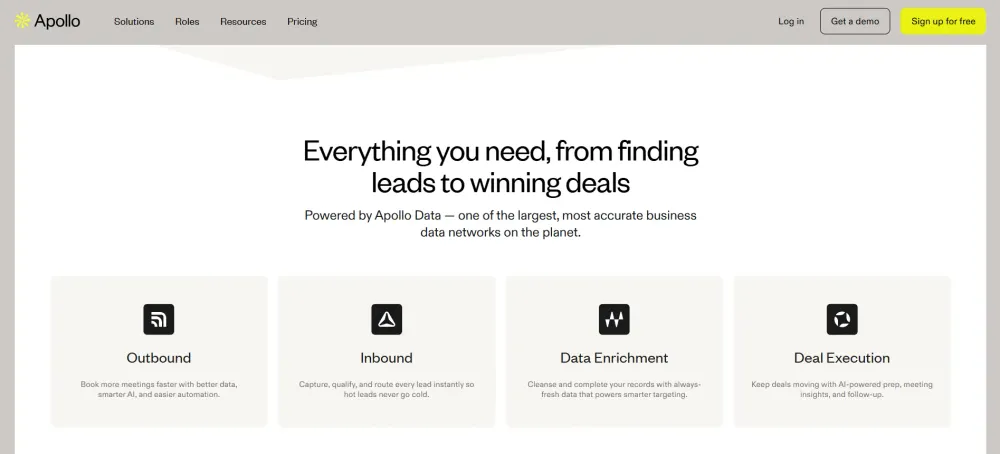
Apollo.io has quickly become one of the most popular choices for sales teams that want both a large contact database and built-in outreach tools without paying enterprise-level prices.
It sits in a sweet spot between affordability and capability — making it a go-to for startups and growing sales teams alike.
Apollo lets you search and filter its contact database by your exact ICP criteria, then export verified phone numbers directly into sequences or your CRM — without needing a separate prospecting tool.
Suggested Reading:
5 Best Apollo.io Alternatives for B2B Lead Generation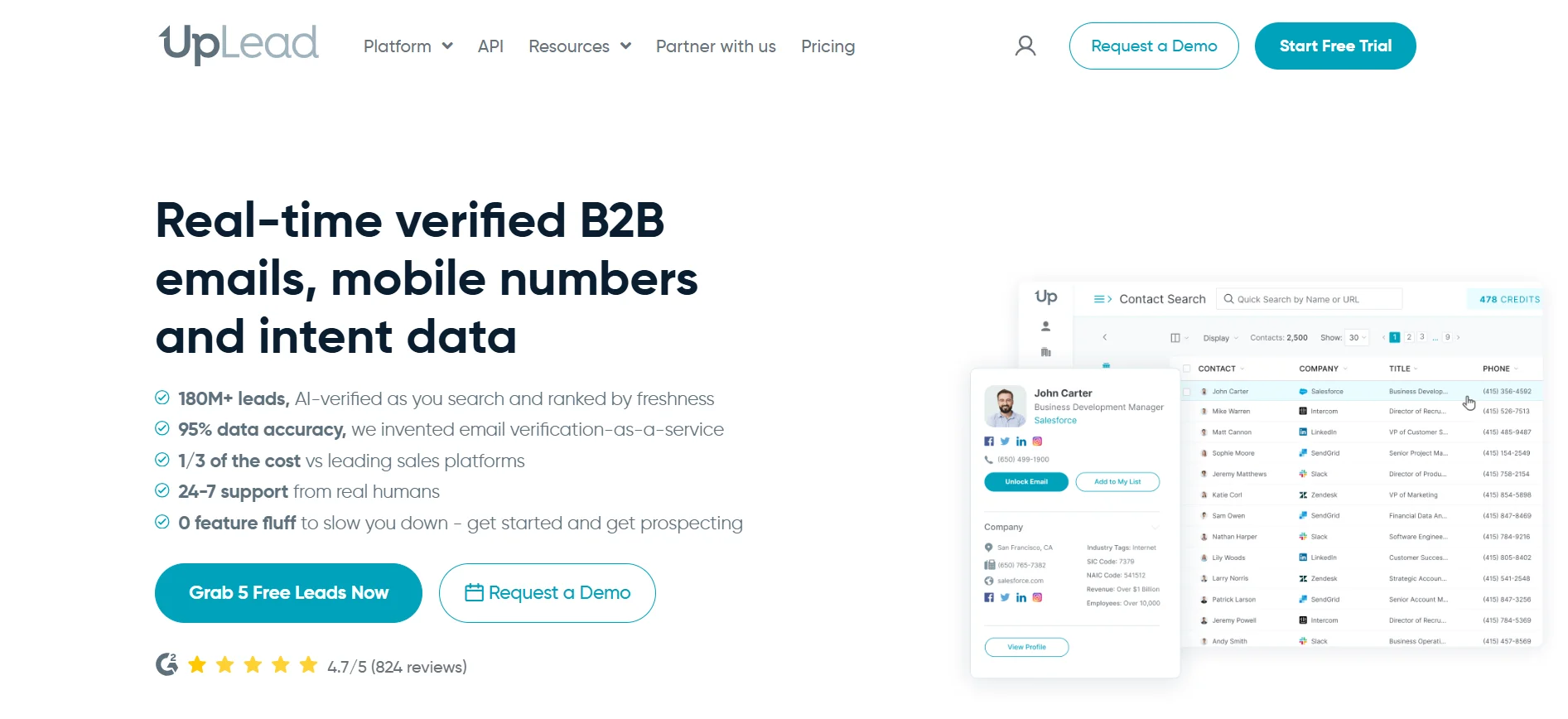
UpLead positions itself as a high-accuracy alternative to the larger database providers — and its standout claim is a 95% data accuracy guarantee, which is something most competitors don't publicly commit to.
For teams where data quality matters more than raw volume, that's a meaningful distinction.
UpLead verifies contact data in real time — meaning every phone number and email you export has been checked at the moment of download, not weeks earlier.
That makes the business phone number lists you pull from UpLead notably cleaner than what you'd get from providers relying on static database snapshots.
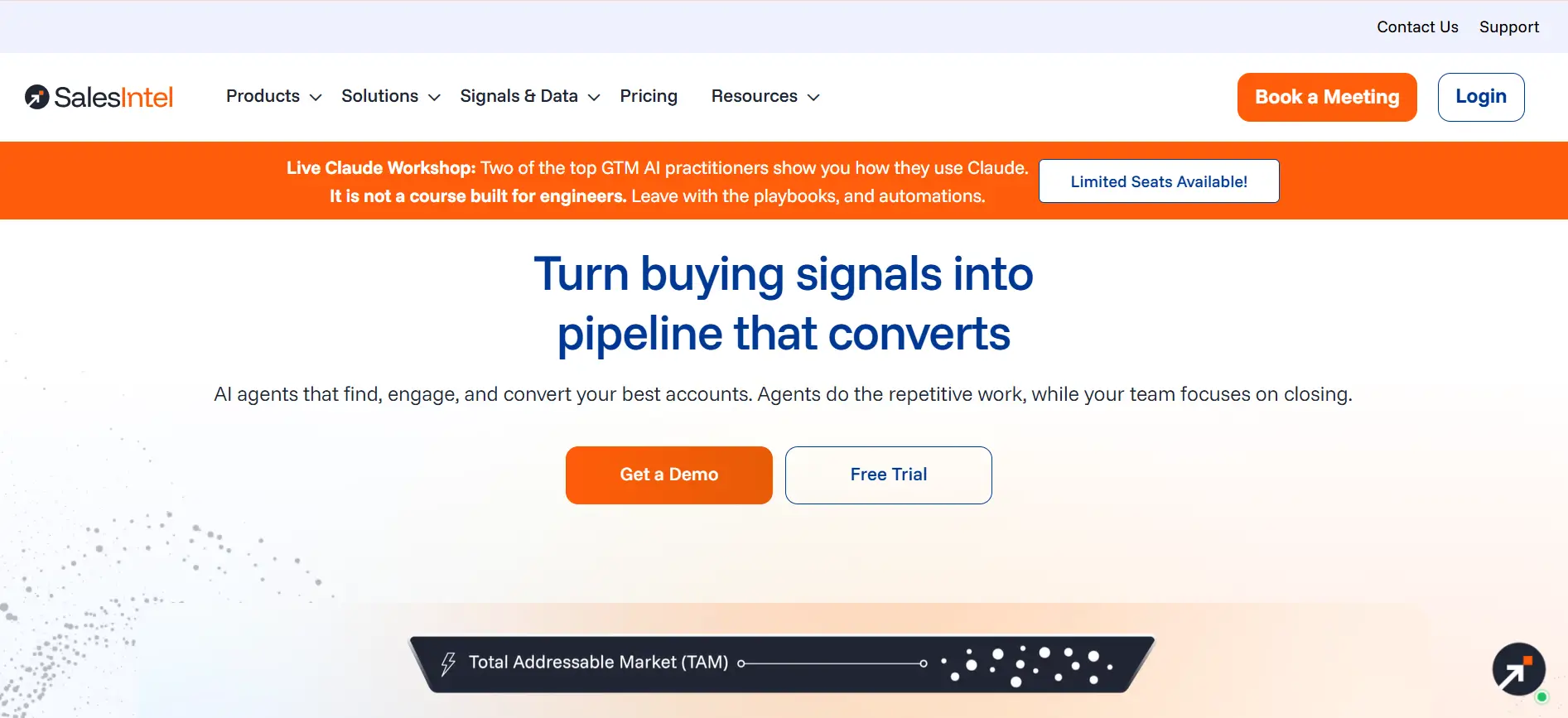
SalesIntel takes a research-first approach to B2B contact data — and that's what sets it apart from purely automated database providers.
Rather than relying solely on machine-sourced records, SalesIntel uses a team of human researchers to verify phone numbers and contact details, re-verifying its database every 90 days.
SalesIntel's research-on-demand feature is particularly useful — if you can't find a specific decision-maker's phone number in the database, you can request it and their team will manually source and verify it for you.
SalesIntel uses custom pricing based on team size and data requirements. A demo is required to receive a quote.
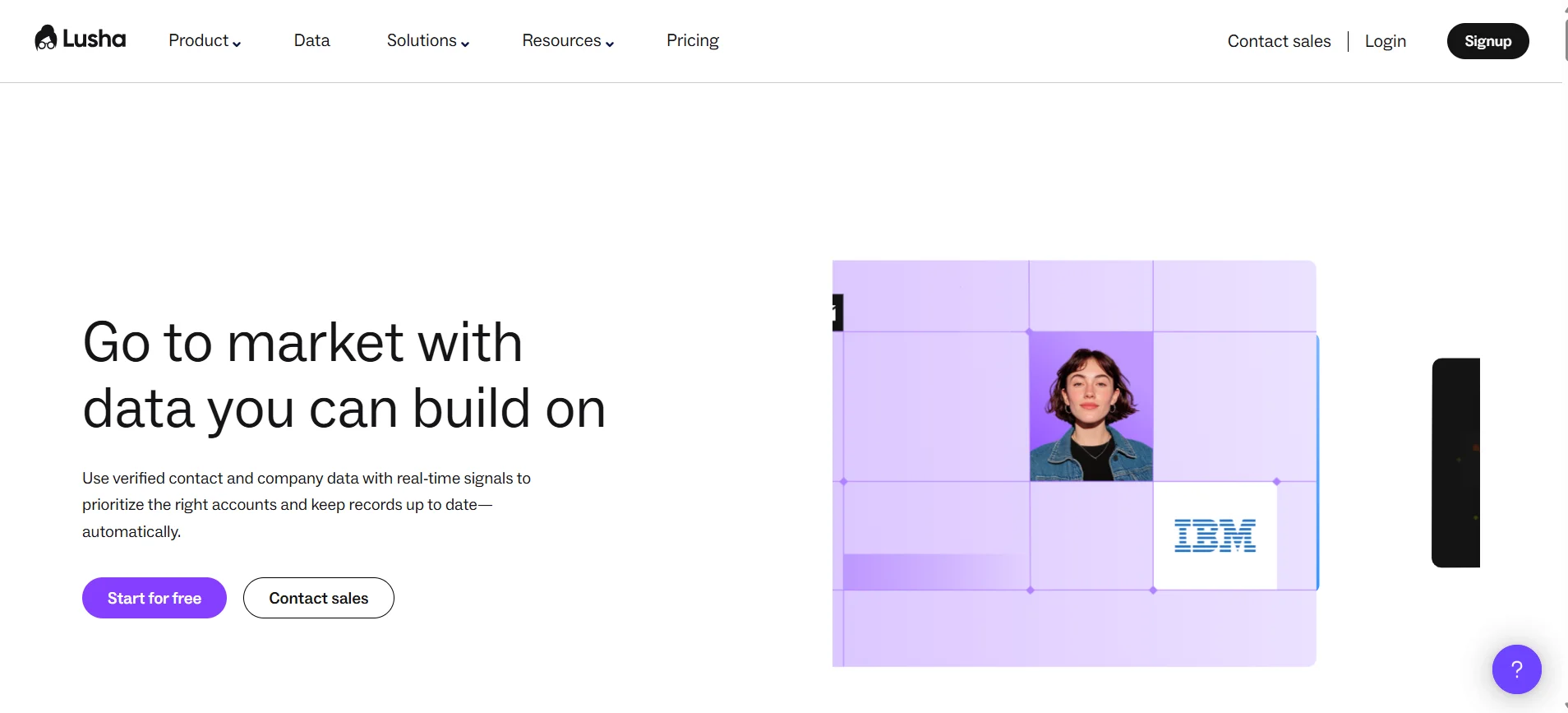
Lusha has built a strong reputation as one of the easiest tools to get started with for finding direct business phone numbers — particularly for individual reps and smaller teams that don't need a full enterprise data platform.
Where it really shines is speed. You can find a verified phone number for a prospect in a matter of seconds, directly from their LinkedIn profile.
Lusha lets you prospect at the individual level — pulling verified phone numbers contact by contact via LinkedIn or in bulk through its platform filters — making it easy to build a targeted, callable list without a steep learning curve.
Suggested Reading:
11 Lusha Alternatives for 2026: Better Data, Pricing & Accuracy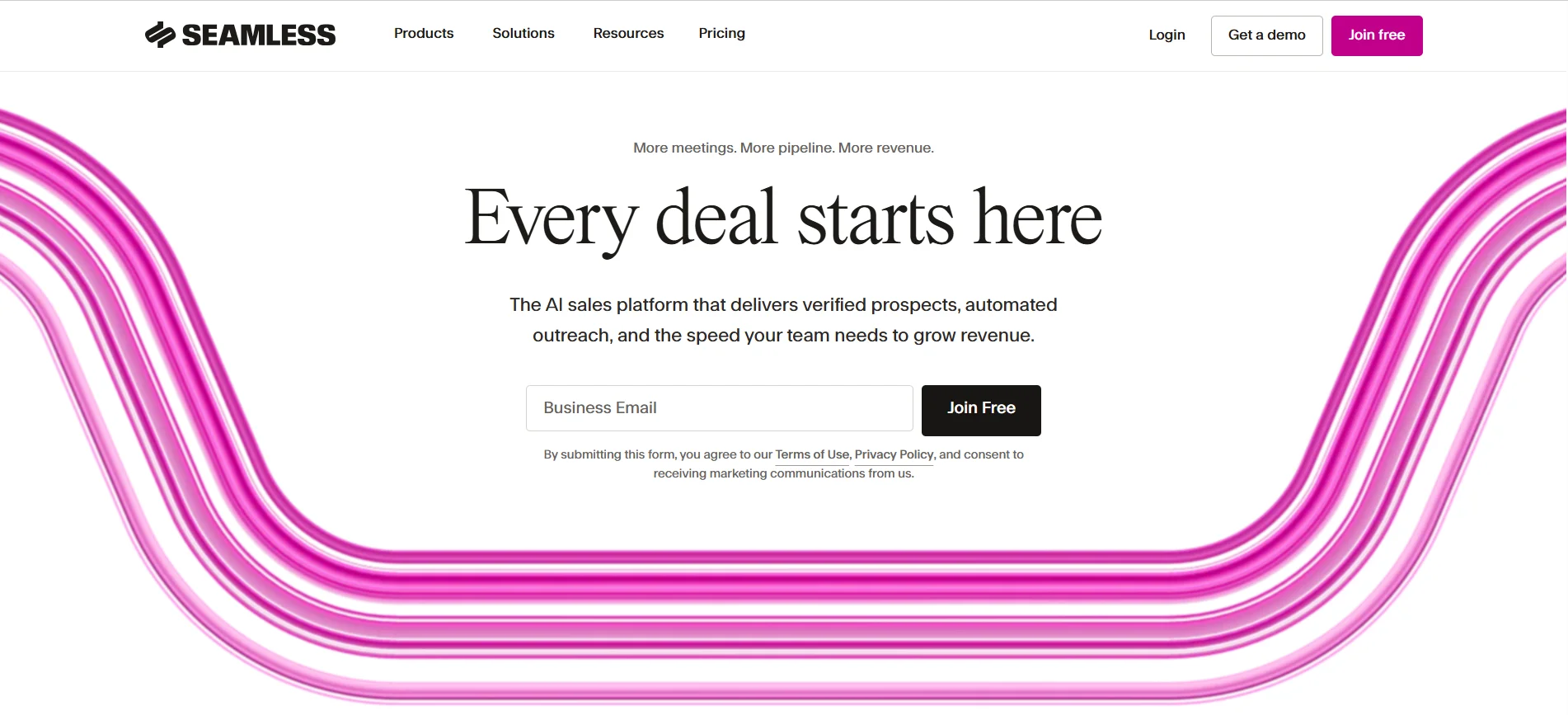
Seamless.AI takes a different approach to contact data compared to most providers on this list — instead of pulling from a static database, it uses AI to search and build contact information in real time at the point of your request.
That distinction matters when you're chasing decision-makers in fast-moving industries where contact details change frequently.
Seamless.AI searches and verifies business phone numbers in real time as you prospect — rather than serving pre-stored records — which means the contact data you pull tends to reflect more current information than traditional static databases.
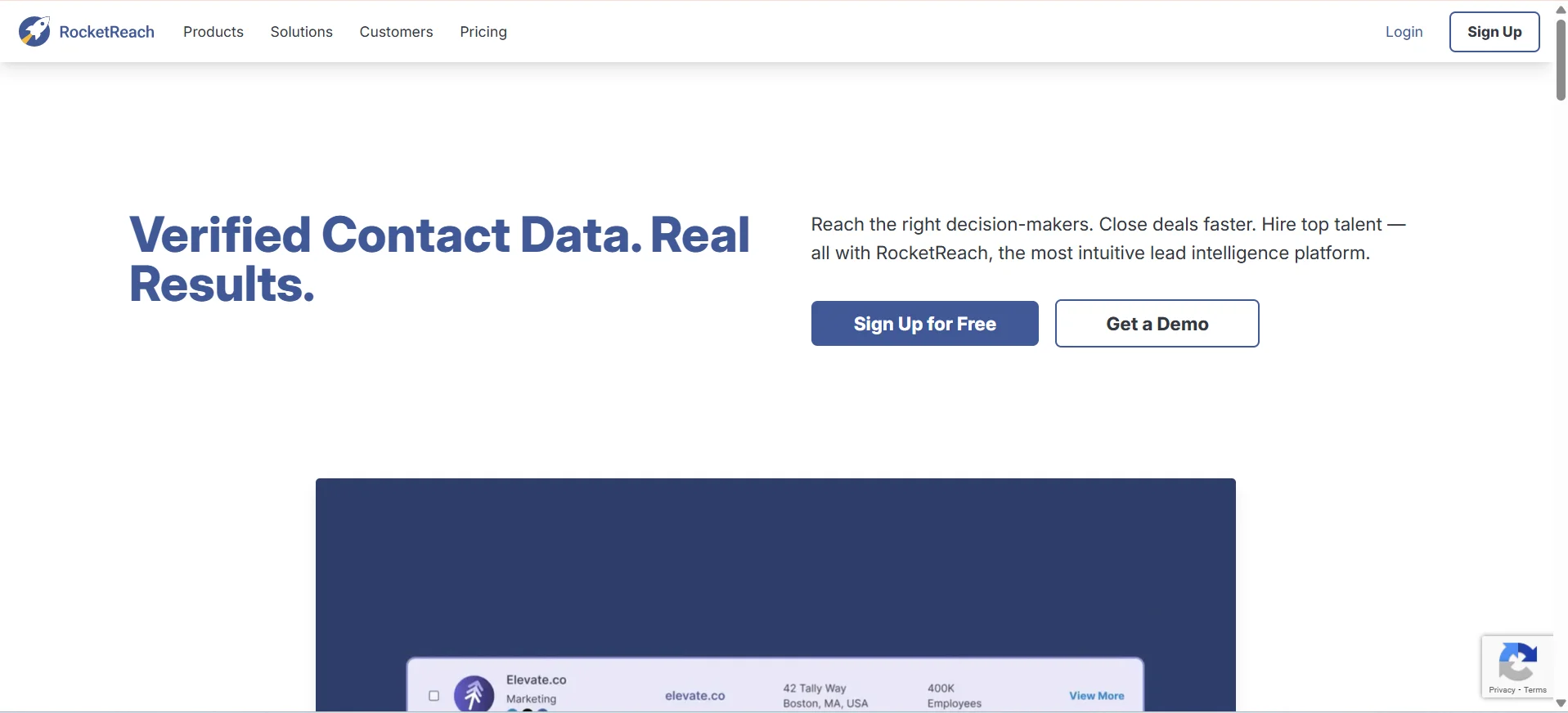
RocketReach is a solid mid-range option for teams that need reliable contact data without committing to the complexity or cost of an enterprise platform.
It covers a broad range of professionals across industries and geographies, making it a practical choice for teams prospecting across diverse markets.
RocketReach lets you filter prospects by job title, industry, location, and company size, then pulls verified phone numbers for each matching contact in bulk — making it straightforward to build a targeted business phone number list without a lot of manual effort involved.
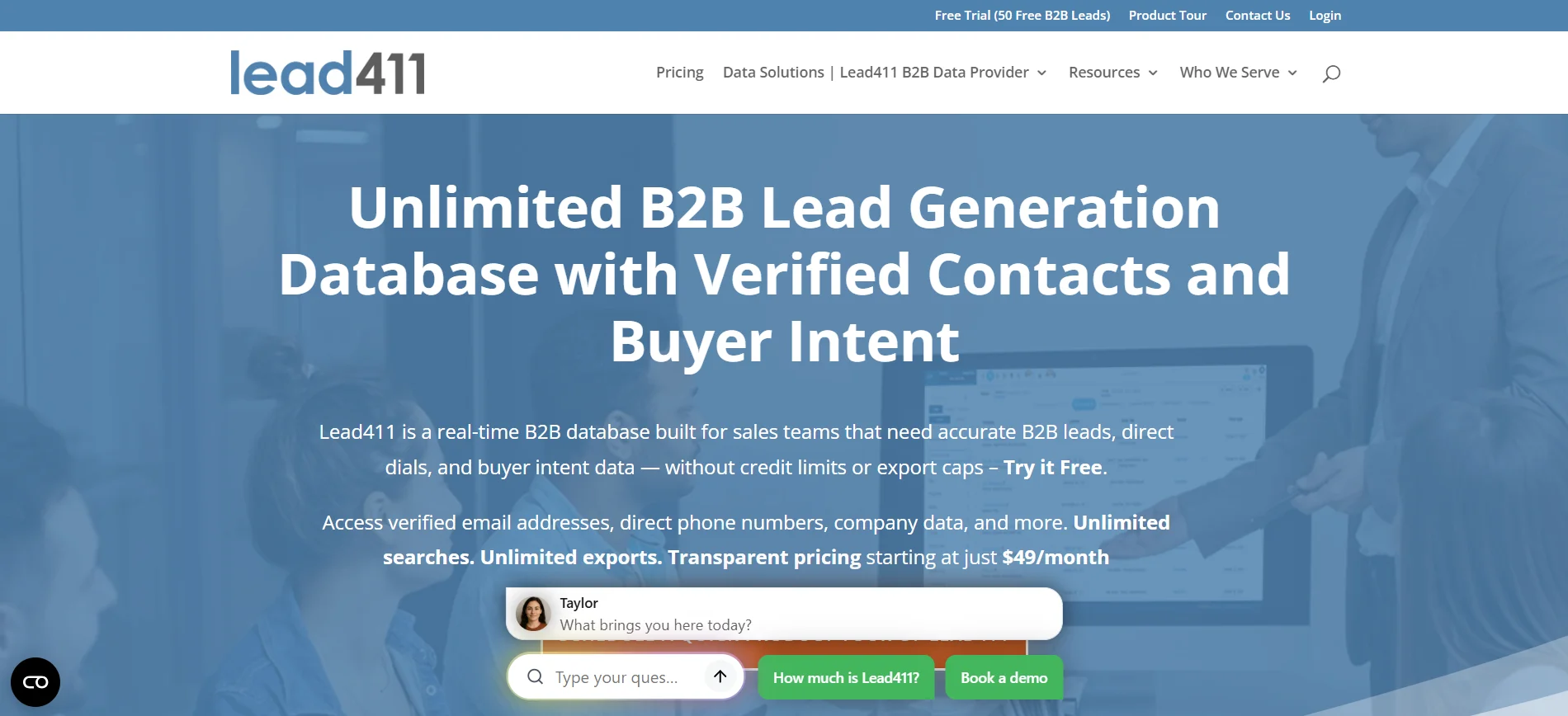
Lead411 is a data provider that focuses heavily on trigger-based prospecting — helping sales teams reach out to the right companies at exactly the right moment, not just when a rep happens to get around to it.
That timing-first philosophy makes it a useful option for teams that want their business phone number list to be built around buying signals, not just firmographic filters alone.
Lead411 lets you layer intent triggers on top of standard ICP filters — so the phone number lists you build aren't just targeted by profile, they're prioritized by companies actively showing signals of readiness to buy.
Suggested Reading:
12 Lead411 Alternatives With Better Data Accuracy & ROI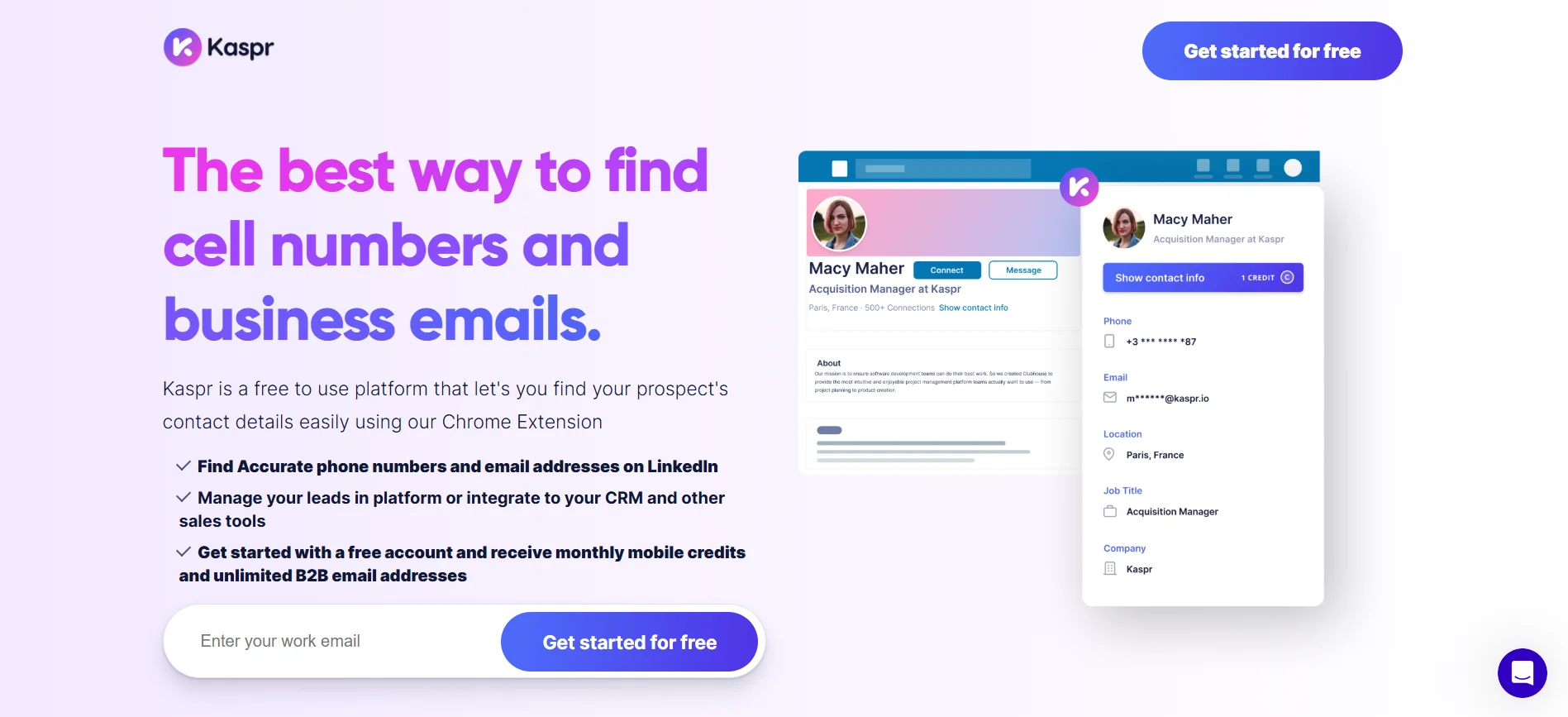
Kaspr is a LinkedIn-first prospecting tool built specifically around finding verified phone numbers and email addresses directly from LinkedIn profiles — making it a natural fit for SDRs who spend a significant portion of their day working inside LinkedIn.
Its simplicity is part of the appeal. You don't need to learn a complex platform to start pulling verified contact data within minutes.
Kaspr lets you turn a LinkedIn search into a callable phone number list without ever leaving the browser — extract verified numbers from individual profiles or in bulk from search results and push them straight into your outreach workflow.
With eleven solid options on the table, the real question isn't which provider is the best — it's which one is the right fit for how your team actually works.
Here's what to evaluate before you decide.
Not all verification is created equal.
Some providers rely entirely on automated systems that check whether a number format is valid.
Others run multi-step processes — cross-referencing records across multiple data sources, flagging numbers that haven't been confirmed recently, or using human researchers to manually validate high-priority contacts.
The question to ask every provider is simple: when was this number last verified, and how?
A number verified six months ago through an automated check is a very different asset than one verified last week by a human researcher. That gap shows up directly in your connection rates.
A provider might have hundreds of millions of contacts globally but thin coverage in your specific niche.
Before committing, test the database against your actual ICP — your target industries, company sizes, geographies, and seniority levels.
See how many relevant contacts surface and how many of those include verified phone numbers.
Also pay attention to filtering depth. The more precisely you can define who you're looking for, the more useful your business phone number list becomes in practice.
This one often gets skipped — until it becomes a problem.
If you're reaching out to prospects in Europe, GDPR applies. California-based contacts fall under CCPA. Different regions carry different requirements around consent and data usage.
Before signing with any phone data provider, confirm they are compliant with the regulations that cover your target markets.
Look for providers that are transparent about their data sourcing, consent frameworks, and how they handle opt-outs.
Compliance isn't a checkbox — it's what keeps your outbound sustainable long term.
Investing in contact data feels straightforward — until you realize the list you paid for isn't generating the results you expected.
Most of the time, it comes down to the same avoidable mistakes.
It's easy to get impressed by big numbers. Hundreds of millions of contacts sounds like more opportunity — but size without quality is just a larger pile of bad data.
A provider with 50 million well-maintained, recently verified contacts will consistently outperform one with 500 million records that haven't been refreshed in months.
Before you buy, ask about verification frequency and accuracy rates — not just how many contacts are in the database.
This is where a lot of teams get caught off guard.
A provider might have strong overall numbers but thin, patchy coverage in your specific niche.
That gap shows up fast when you start prospecting and realize the decision-makers you actually need aren't in the database — or their phone numbers are missing.
Always test any provider against your real ICP before committing. Filter by your target industries, company sizes, geographies, and seniority levels and see what actually comes back with verified phone data attached.
Broad lists feel like a shortcut. In practice, they slow everything down.
When your business phone number list isn't built around a clear ICP, your reps end up calling people who were never a fit to begin with. That means:
Targeted prospecting always outperforms volume. A smaller, well-defined list of relevant contacts will generate more pipeline than a bloated, generic one every single time.
Building a reliable business phone number list isn't about finding the biggest database — it's about finding verified, targeted contact data that actually connects your team to the right people.
The providers in this guide each bring something different to the table. The right choice depends on your market, your team size, and how much of your workflow you want to keep in one place.
If you're looking for a platform that combines lead search, phone number verification, and outreach in a single system — Oppora is worth exploring.
You can start free and see how quickly a targeted, callable list comes together.
Yes, cold calling using B2B contact data is generally legal in most regions, provided you follow relevant regulations like TCPA in the US. Always ensure your provider sources data compliantly and that you're calling business numbers during appropriate hours.
Ideally every 90 days. B2B contact data decays rapidly due to job changes and company restructuring. Working off a list older than three months means a significant portion of your phone numbers may already be outdated or disconnected.
A direct dial connects you straight to a specific person's desk line, bypassing receptionists. A mobile number reaches them personally, wherever they are. Mobile numbers typically generate higher connection rates since prospects are more likely to answer personal devices than office lines.
Technically yes, but SMS outreach to business contacts carries stricter consent requirements than voice calls, particularly under TCPA in the US. Always confirm your provider's data includes consent flags for SMS before running text-based outreach campaigns to avoid compliance risks.
It depends on your outreach volume. A rep making 50 calls daily needs roughly 1,000 verified numbers per month accounting for list overlap and retries. Start with a smaller credit allocation, measure your connection rates, and scale your phone credit usage accordingly based on real results.
Summarize with AI
Share